













By Lawrence Smith
Kentucky Today
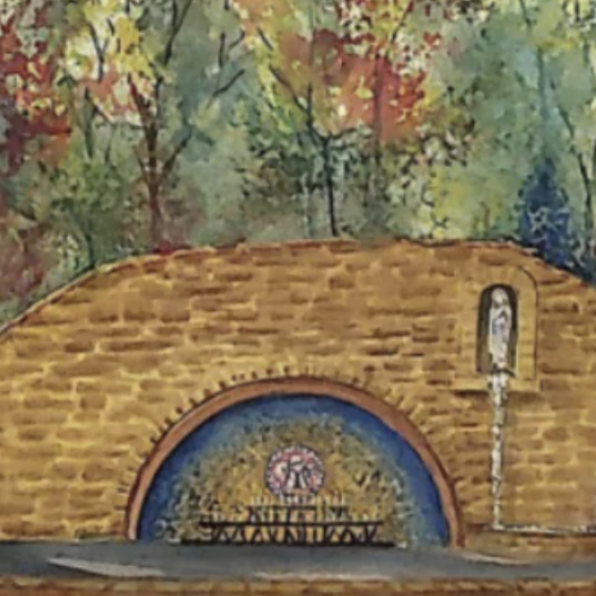
Should a Catholic church in Northern Kentucky (Our Lady of Lourdes in Park Hills) be allowed to build a shrine to the Virgin Mary on its property? That’s the question at the center of a legal dispute that now involves Kentucky Attorney General Russell Coleman as well as attorneys general from 17 other states.
Coleman’s office has filed a brief with the U.S. Supreme Court urging the justices to reverse a ruling by the Kentucky Supreme Court that blocked construction of 600-square foot grotto by the Missionaries of St. John the Baptist.
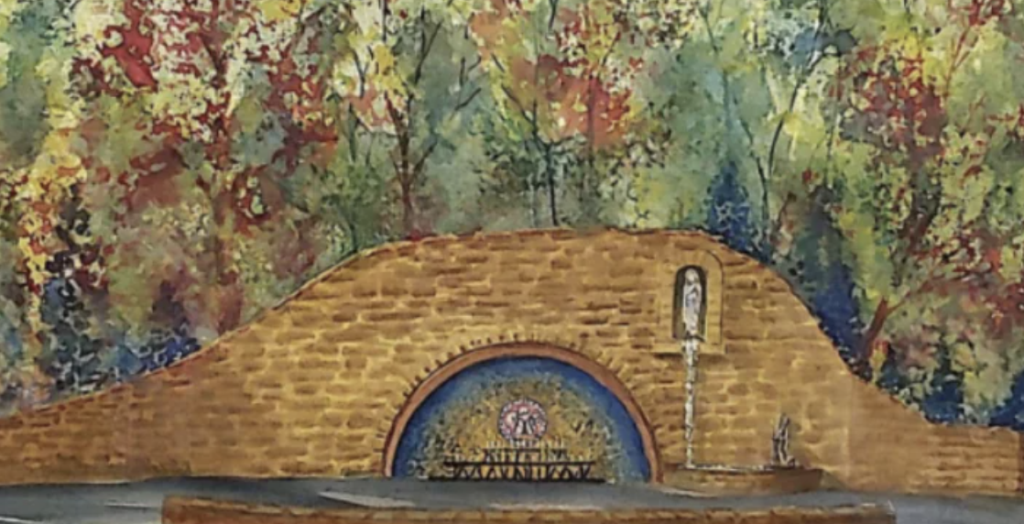
“We’re talking about a small extension of the faith of this of this parish. We’re talking about roughly 600 feet, the size of a swimming pool,” Coleman said in an interview with Newsmax.
“Although it is a small space in a beautiful area of Park Hills, Kentucky, the implications will affect the religious liberty of those across this country, not only in churches but in religious schools, and so this is this is significant. What happens with these folks here in Kentucky will impact people of faith and their free expression across this country.”
Local zoning officials had approved the shrine in 2021, but nearby property owners successfully challenged the decision, with the Kentucky Supreme Court ruling in their favor.
Coleman argues that ruling violates the Religious Land Use and Institutionalized Persons Act (RLUIPA) passed by Congress in 2000.
“Eighteen attorneys general are rowing together on this, asserting that this law was designed by Congress to correct, sadly, generations of discrimination against people of faith using local zoning ordinances.
“This law was passed in 2000 unanimously. Think about that. Unanimously, Congress passed this, and it was misapplied, unfortunately, by our Supreme Court here in Kentucky that failed to protect Catholics, failed to protect people of faith,” said Coleman.
In October, the High Court agreed to hear the case. It’s the first time the Court has considered the RLUIPA’s land-use protection.
“We look forward to the Supreme Court of the United States correcting that failure to interpret the law correctly here in Kentucky and protect the free expression of Americans’ faith,” Coleman said.
Kentucky has been joined in the case by Alabama, Arkansas, Florida, Georgia, Idaho, Iowa, Kansas, Louisiana, Mississippi, Missouri, Nebraska, South Carolina, South Dakota, Tennessee, Texas, Utah and West Virginia.
“We have long in this country recognized that physical structures can be an extension, a free expression of faith,” said Coleman. “Unfortunately, what has happened here is allowing a heckler’s veto, allowing a couple people in the neighborhood, to block the free expression of the faith of a whole congregation.”