













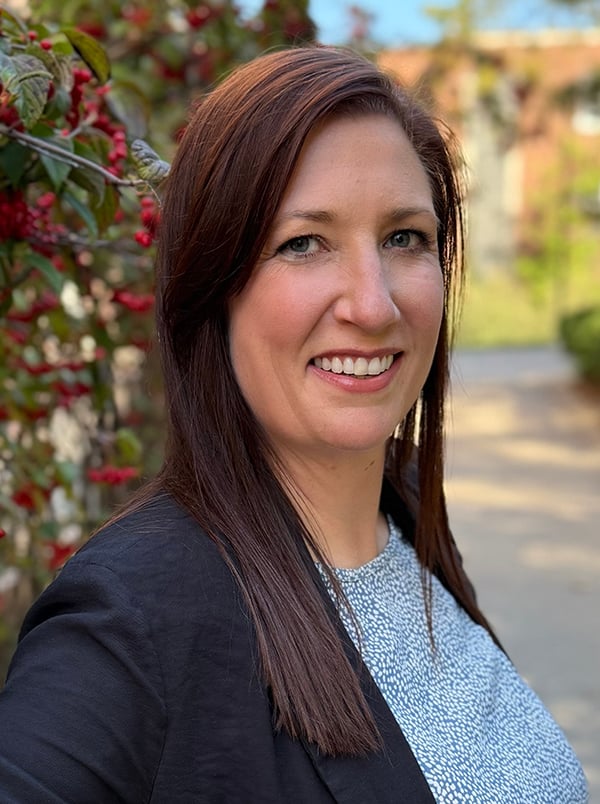
By Dr. Erin B. Hester
University of Kentucky
Every November, we set out to help people understand why lung cancer is a disease we can’t afford to ignore. We call it raising awareness. We do it through mortality statistics, memorials, and stories of families forever changed.
We’ve made our point. People know what’s at stake.
For nearly two decades, national surveys have consistently shown that most Americans associate cancer with death. In that same timeframe, among adults who smoke, awareness that smoking causes lung cancer has long exceeded 90%.
People aren’t just aware of the danger. They’re afraid of it. In fact, fear of finding out is among the most commonly reported barriers to lung screening.
What if the problem isn’t a lack of awareness about lung cancer? What if people understand the urgency, but not what they can do about it?
I’m not a surgeon. I can’t read your CT scan, and you certainly don’t want me determining your treatment plan. (I’ll leave that to the clinicians at Markey Cancer Center—Kentucky’s first and only NCI-Designated Comprehensive Cancer Center.)
My expertise is words.
I’m a strategic public health communication researcher. That means I spend a lot of time thinking about what makes people recognize the urgency of a problem and what moves them to do something about it.
And that’s where our awareness efforts sometimes fall short: Too often, we reinforce what people already believe instead of giving them reason to believe their future could look different.
The story we’ve told about lung cancer is true, but it’s incomplete.
Consider how much has changed: Today, we can find it earlier. We have more ways to treat it. And more people are surviving it. Advances in immunotherapy and targeted treatments are changing not only how long some people live with lung cancer, but what ‘living with it’ can look like. That can mean more time to enjoy life on their own terms.
Lung cancer hasn’t gone away. But it doesn’t look the way it did a generation ago. And that changes what awareness needs to accomplish.
Knowing something is dangerous is only part of what moves people to act. People also need to believe that something can be done, that those actions can make a difference, and that it’s within their reach.
If I spend all my time convincing you that a problem is serious but never show you a way forward, I haven’t necessarily motivated you. I’ve just made you really, REALLY aware of how big the threat is.
And when the threat is cancer, giving someone one more reason to be afraid may also give them one more reason to look away.
Tell the Rest of the Story
This Lung Cancer Awareness Month, I’m not asking us to stop honoring those we’ve lost. I’m asking us to tell the rest of the story.
1. Tell people lung cancer is serious—but also what early detection can change.
Large clinical trials have shown that low-dose CT screening reduces lung cancer deaths by approximately 20% among people at higher risk. Screening creates an opportunity to find cancer earlier, when treatment is more likely to be successful.
That’s not just another statistic about cancer. It’s evidence that the future isn’t necessarily predetermined.
2. Tell people who’s at risk—but also what they can do.
Screening happens before symptoms, while life is still happening.
Ask a doctor whether screening is right for you. You don’t have to wait until something feels wrong, and you don’t have to be ready to quit smoking to be ready for screening.
That’s not simply a story about searching for illness. It’s a story about protecting health before illness can interrupt everything else.
3. Tell stories about people we’ve lost—but also about lives still being lived.
We should make room for people to see themselves not as potential patients, but as people with lives still unfolding around them. Another birthday. Another afternoon on the lake. Another sleepover with the grandkids. Another completely unremarkable Tuesday with someone you love. Sometimes the most compelling reason to take care of your health isn’t the disease you’re trying to avoid. It’s the life you want to keep living.
These aren’t distractions from the serious business of lung cancer care. They’re the reason the serious business matters.
Before we publish another awareness message this November, let’s ask, “What will someone believe is possible after seeing this?”
We’ve spent decades showing people what lung cancer can take from them. Let’s make sure they also understand what earlier detection and better treatments might help them keep: more time for the people and moments that matter most.
Dr. Erin B. Hester, Ph.D., is an assistant professor in the Department of Integrated Strategic Communication at the University of Kentucky.