
















By Steve Flairty
NKyTribune columnist
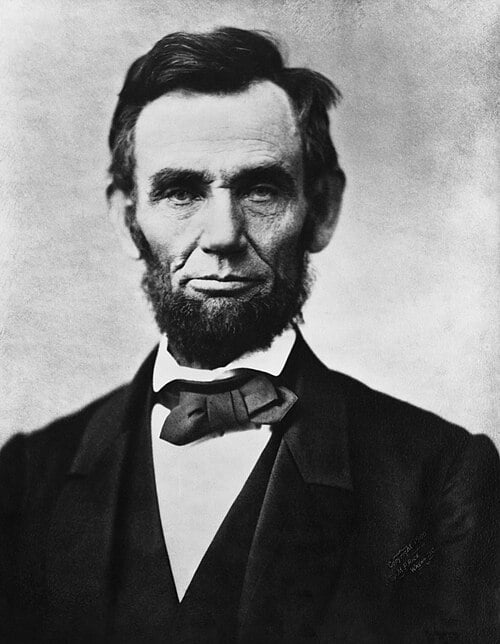
The great Abraham Lincoln is often described as a “man of melancholy.” His long struggle with depression, exasperated by the extreme pressures of a Civil War presidency and personal family tragedies, is well-documented.
But he was also a “man of humor,” and that is also well-documented. Likely, Lincoln used humor as an antidote to his melancholy, and his wit could be absolutely winsome—an important part of influencing people and navigating fierce political wars and other life challenges thrust upon him.
There are lots of examples, as I found in my research.
As a soldier in the Black Hawk War, he admitted he had seen no “live, fighting Indians” but “had a good many struggles with the mosquitos.”
Responding to political opponent Stephen Douglas in the 1858 U.S. Senate race, who called him “two-faced,” Lincoln replied: “I leave it to my audience. If I had another face, do you think I would wear this one?”
Lincoln received more votes than Douglas but lost the election in the state legislature. Disappointed, he said, “I feel like the boy who stubbed his toe; I am too big to cry and too badly hurt to laugh.”
Lincoln understood that he wasn’t a handsome man, and he would joke about it. He told of a woman who confronted him on the street, telling him that his ugliness spoiled her walk. “I am sorry, madam, but there is nothing I can do,” he told her.
“Yes, there is,” she replied, “you could stay indoors more.”
Another story Lincoln related was about a stranger he met on a railroad car. “I have an article in my possession which belongs to you,” the stranger said, showing him a jack-knife drawn from his pocket. “This . . . was placed in my hands . . . with the injunction that I was to keep it until I found a man uglier than myself. Allow me to say, sir, that I think you are entitled to the property.”
President Lincoln could, at times, be bawdy in his humor. He once responded to an empathetic woman who asked a hospitalized Civil War soldier specifically where he was injured. The soldier, regrettably having been shot in the testicles, deflected the question by saying: “At Antietam.” The somewhat frustrated woman asked the President if he might help facilitate the conversation. After Lincoln talked privately to the soldier, he reportedly took her hands in his own and said: “My dear girl, the ball that hit him would have missed you.”
A group contacted Lincoln to lobby for their person to be appointed to an important post in the Sandwich Islands (later to be known as “Hawaii). They mentioned that the candidate would be a good fit for the job and it would also benefit his health because of the good weather. At the close of the meeting, and obviously not impressed, the president said, “Gentlemen, I am sorry to say that there are eight other applicants for that place, and they are all sicker than your man.”
A congressman quickly informed President Lincoln that the Postmaster of Washington D.C. had died and that he’d like to take his place. Hmmm. The President replied, “Well, that will be fine with me if it is OK with the undertaker.”
Then there was the Lincoln story about keeping a grudge. A couple of neighbors quarreled for years, probably forgetting what even started it. The older one fell ill and was not expected to live through the night. The longtime quarrelsome partner came over to offer peace between the two before his neighbor died. The two shook hands. As the neighbor was leaving, the sick man perked up a bit and said: “But if I recover, the old grudge stands!”
Another story Lincoln liked to tell was about the young man who was perturbed that his wealthy parents wouldn’t share the money with him before the time of inheritance arrived. The son killed them and was arrested and convicted. Before sentencing, the judge asked the less-than-intelligent young man if he had anything to say. “I hope that the court will be lenient with me, for sir, you see, I am an orphan,” said the son.
Lincoln’s Secretary of State Seward was approached in frustration by a senator who complained that when he wanted to lecture Lincoln, the President would interrupt and tell him a story. The senator would then just leave in a huff. Seward explained to the upset man that Lincoln’s stories had a purpose, and the senator wanted to know what the purpose was in his case. Seward replied, “He gets rid of you, doesn’t he?”
Lincoln quoted a less-than-devout sailor who prayed for rescue from a storm. “Oh Lord, it’s seldom that I bother thee, but I would like to not die today and, if I live, you and me both know I won’t be bothering you again for some time.”
A group of lawyers that were traveling on the circuit included foes Lincoln and Stephen Douglas. At dinner together, Lincoln took out his just purchased watch and talked about the price tag of $20. Not to be outdone, Douglas laughed and pridefully showed his watch to the group, costing double that, $40. That night, a thief broke into Lincoln’s room and stole the watch. The next morning, Lincoln placed an ad in the local paper, stating:
To the thief who stole my $20.00 watch last night. If you will return it to me, I will tell you where you can steal one worth twice as much.
I’ll end with this story showing how widely people regarded Lincoln as a humorous person. Two women were discussing the Civil War presidents, Davis for the Confederacy and Lincoln the Union. One woman volunteered that Davis would prevail “because he is a praying man.” The other noted that Lincoln was likewise a praying man. To which the Davis advocate replied, “Yes, dear, but the Lord will think Abe is joking.”
Steve Flairty is a teacher, public speaker and an author of seven books: a biography of Kentucky Afield host Tim Farmer and six in the Kentucky’s Everyday Heroes series, including a kids’ version. Steve’s “Kentucky’s Everyday Heroes #5,” was released in 2019. Steve is a senior correspondent for Kentucky Monthly, a weekly NKyTribune columnist, and a former member of the Kentucky Humanities Council Speakers Bureau. Contact him at sflairty2001@yahoo.com or visit his Facebook page, “Kentucky in Common: Word Sketches in Tribute.”