















There was a miracle this election day in Texas. And a blip in Kentucky.
After years wondering the political woods, Texas Democrats emerged with a vengeance on Nov. 3, electing a U.S senator, state constitutional officers from the governor on down and assuming control of the state House, thus providing hope to Democrats in similar states that have operated for years under Republican control.
That includes Kentucky. Commonwealth Democrats, who have experienced sinking fortunes for most of the 21st Century, made modest gains this political season, though barely scratching the surface of the progress made by Democrats in other states, including Texas and, believe it or not, Mississippi.
Democrat Zach Dembo, in his first run for public office, easily defeated Republican Ralph Alvarado, a former state senator, by nine points, thus flipping the state’s 6th Congressional District seat centered in Lexington. Rep. Andy “It’s Not A Sin To Be White’’ Barr, R-Lexington, the current congressman now headed to the U.S. Senate, received 63 percent of the district’s vote just two years ago.
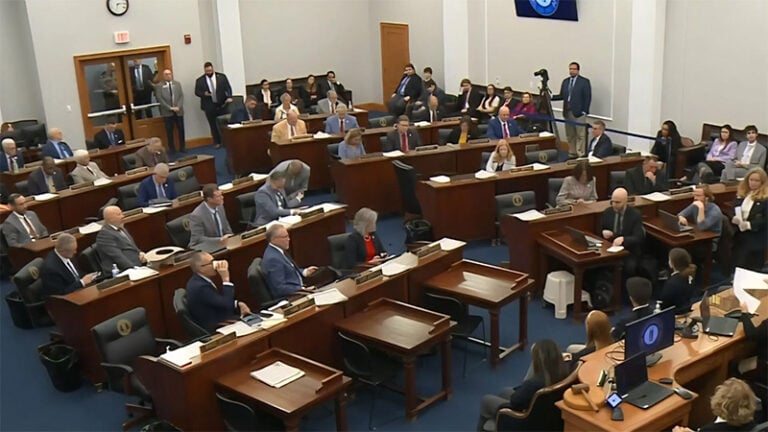
Democrats also flipped nine seats held by Republicans in the state legislature but Republicans retained their iron-fisted control over the General Assembly, meaning public education will continue to suffer, women seeking abortions will have to look beyond the borders and data centers will be welcomed with open arms. Democratic advances were nice, but the limited progress pales in comparison to what was experienced in much of the county. Democrats have regained control of the House in DC by a substantial margin and grabbed eight Senate seats held by the GOP with one race — Alaska — yet to be determined.
Quite a haul.
The status of Texas Democrats looked bleak before the surprising results came rolling in. Like Kentucky, Democrats rode high in the Lone Star State for most of the 20th Century. The party controlled the governorship from 1874 to 1979, a staggeringly long period, and produced such statesmen as Lyndon Baines Johnson and Sam Rayburn. Kentucky was similarly situated with Democrats holding the governorship from 1947 to 2003, save for the four year term of Republican Louie Nunn from 1967 to 1971. That tenure also produced noted Democratic statesmen like A.B. “Happy’’ Chandler, Vice President Alben Barkley and Earle Clements (the subject of a biography written by my old pal Al Cross scheduled for release in April, which I look forward to).
Democrats eventually hit the skids in both states. Texas fell first with Republicans holding the governorship every year from 1995 to the present, including future president George W. Bush. It assumed control of the state Senate in 1997 and the House in 2003. Over that period, it became the nation’s most influential GOP state.
Kentucky, meanwhile, has had two Republican governors this century — both disasters but who’s counting? And, as in Texas, the GOP has a strangle hold on the state legislature, taking the Senate in 1999 and the House in 2017. The commonwealth does have a Democratic governor, Andy Beshear. Texas has been led by a Republican, Greg Abbott, since 2015 but he will be replaced by a Democrat, Gina Hinojosa on Jan. 19. It has maintained two Republican senators since 1993. That will change when James Tamarico is sworn in, replacing Sen. John Cornyn. Kentucky has had two GOP senators since 1999 and will continue to do so when the retiring Sen. Mitch McConnell, R-Louisville, is replaced by Barr, and God have mercy on the commonwealth.
So, it’s obvious the political backgrounds of Texas and Kentucky are similar — conservative states ruled by Democrats for decades before turning to Republicans around the approach to the 21st Century. Now, there’s evidence Texas is turning back to the Democrats, at least for the time being.
Will Kentucky follow suit? Probably not. Unlike Texas, commonwealth Democrats have failed to produce the dedicated and indefatigable political workhorses required to rebuild a party. Gov. Andy Beshear, the only Democrat with the sort of authority to kick off that process, has been notoriously missing in action as he tends to his own knitting in preparing for a presidential run. There’s no one at the helm to steer the party in the right direction.
The other issue? White people.
Hinojosa defeated Abbott by more than 700,000 votes, good for 52.8 percent of total. She managed to do so, according to figures provided by NBC News, despite attracting only 40 percent of the White vote. The Latino vote, on the other hand, went for her in a big way, providing Hinojosa with 65 percent of their votes. Black voters chipped in with an astounding 88 percent.
In other words, if this election had occurred before the Voting Rights Act of 1965, Abbott would have won in a landslide. Hinojosa prevailed, as did Tararico in the Senate race, thanks to Black, Latino and young voters.
Texas, obviously, is a diversified state. According to the 2020 Census, 40.2 percent of the population is Latino or Hispanic. Non-Hispanic White people account for 39.8 percent of the population.
When it comes to diversity, Kentucky? Not so much. It is the ninth Whitest state in the union, with White folks comprising 78.7 percent of the Commonwealth’s population. Blacks comprise 8.09 percent while only nine states maintain a lower Latino population that Kentucky’s 4.6 percent.
And there is the question of age. Young people; along with Latinos and Blacks, are generally credited with realizing the Democratic surge in Texas. Kentucky is not a particularly old state with a median age of 39.2, placing it at 22nd among the 50 states. Texas, however, is the second youngest state, trailing only Utah, with a median age of 35.2.
So, Kentucky Democrats, if they hope to regain the status that made them the dominant party of the 20th Century, have a difficult road ahead convincing White voters they are acting on their, and everyone else’s, behalf. That was made evident in the results in the 5th Congressional District.
The 5th is now, and likely always will be, a Republican stronghold. Rep. Hal Rogers, R-Somerset, has represented folks in Southeastern Kentucky since 1981, often winning re-election without opposition.
This time he was challenged by Prestonsburg attorney Ned Pillersdorf a well-known figure because of his work for local residents experiencing difficulties with the Social Security program with for those with disabilities. Pillersdorf campaigned vigorously in a big year for Democrats. Rogers did not. It was a legitimate effort.
Rogers received 71.16 percent of the vote. Pillersdorf got 25.35 percent. This in a year where most of the nation turned its back on Republican President-cum-Dictator Donald J. Trump and his policies.
Now, keep in mind, Rogers doesn’t always vote in the best interests of his constituents. A 2024 study determined that the 5th is the second poorest congressional district in the U.S. The Kentucky Center for Economic Policy determined that about 44.1 percent of the folks are on Medicaid. Yet Rogers voted for Trump’s Big Beautiful Bill which cut taxes and, in order to offset the loss of revenue, slashed Medicaid funding that, among other things, threatens benefits and the closure of numerous rural hospitals, like those in the 5th Congressional District.
Rogers, by the way, will be 90 at the start of the next Congress in January. Apparently unpersuaded by the physical and mental decline of elderly figures like Mitch McConnell and former President Joe Biden, the good folks of the 5th District gave Hal Rogers 71 percent of the vote in a year when Democrats stormed across the political map.
The 2010 Census, it should be noted, identified the 5th as the Whitest district in the nation, with about 93.7 percent of the residents falling in that category.
Pillersdorf, writing on Facebook, noted that Kentucky Democrats were ‘giving themselves a standing ovation for their modest wins in the midterm’’
“In fact, the performance of the Kentucky Democratic Party when compared to other southern states was an abysmal failure,’’ he noted.
Pillersdorf has a point. The Kentucky Democratic Party provided him with practically no assistance. It generally has done little to rebuild, concentrating instead, it appears, on promoting Beshear’s burgeoning presidential campaign rather than take the steps necessary to invigorate a once great political institution.
The party can’t even recruit candidates. Charles Booker, a one-term state representative from Louisville, wound up as the Democratic nominee for Senate, losing to Republican Andy Barr by 12 percentage points, garnering 42.9 percent of the total. Booker was already a two-time loser in Senate campaigns, now make it three. He didn’t run a television ad until, literally, the final week of the campaign. He never had a chance.
But at least he stepped up while the party sat on its hands.
In Texas, Democrats found James Talarico. In Kentucky they found Charles Booker. See the difference?
In the meantime, no Democratic candidate filed to run in 42 of the 80 state House districts held by Republicans. The state Senate offered a similar story with a Democrat running in only nine of the 18 seats held by Republicans.
If you don’t run, you can’t win.
Like it or not, this falls on Beshear’s shoulders. For years, Texas Democrats hung together and before finally breaking through. There is no such organized effort in Kentucky and the party continues flailing in campaigns for most major offices save for governor. There’s no apparent plan and Andy’s busy running for president.
There’s little doubt, given the demographics, that Kentucky will prove to be a harder nut for Democrats to crack than Texas. That doesn’t mean you give up. It just means you work harder.