











On Monday, a Kentucky State Police cruiser stopped at the Independence Kroger on Declaration Drive, not for a traffic enforcement operation but to collect food. The Northern Kentucky Tribune reported that this visit, from 9 a.m.-3 p.m., was part of the statewide Cram the Cruiser drive running through December 5. There is a reason that image is worth considering. A patrol car usually brings to mind authority, emergencies, or somebody's worst afternoon. For a few hours, the same familiar vehicle can become a place where neighbors think about a family that needs dinner.
The idea works partly because it is visible. A family carrying a box of cereal across a parking lot sees the uniform, the vehicle, and an ordinary community need come together. Yet a full cruiser is only one measure of the day's success. The larger opportunity is to ask what a uniform can communicate when nobody is being investigated, no citation is being written, and no crisis has yet happened. The answer might be that a public servant can be recognized not only by the powers entrusted to the job, but also by the care shown to people who would rather not have to ask for help.

This is not an argument that a food drive settles every question about policing. Residents can have serious and different views about law enforcement, accountability, spending, and the proper role of public agencies.
Those debates matter. We should not use a charitable event as a substitute for them. But we need not pretend that the only meaningful encounters between communities and police officers are confrontations. An ordinary, respectful exchange can teach something about how public trust begins, even if it cannot complete the work on its own.
The Tribune reports that Kentucky State Police collected nearly 307,000 pounds of food during last year's drive and that donations gathered at posts remain in their surrounding communities. Those are significant facts. They also raise a useful question for the people organizing a successful collection: What happens after the bags leave the cruiser? Food has to be sorted, stored, transported, and placed with organizations able to reach households.
The visibility of the collection is valuable precisely because quieter work follows. When an officer accepts a donation, the story is not finished; a chain of responsibility has begun.
Jesus describes a similar difference between being seen doing something good and accepting the harder responsibilities of mercy. In Luke 10, his Good Samaritan does not stop at noticing an injured traveler. He approaches, provides immediate care, arranges a safer place, and makes provision for what comes next. The Samaritan's help is not merely a kind thought or a passing performance. It has a second day. That is one reason the parable still challenges Christians: love of neighbor becomes credible when it changes the choices we make after the emotional moment has passed.
For Northern Kentucky, that teaching suggests several questions worth asking without pretending to know the answers. Are the community partners who receive food equipped to distribute it at hours working families can use? Do people know how to find help without feeling exposed in public? Can an older neighbor without a car find a practical route to a pantry? Is the food requested the kind local organizations can safely store and households can actually prepare? The best answers will come from pantry workers and the families they serve. A good public service effort makes room for their knowledge rather than making assumptions on their behalf.

It also matters how we talk about the recipients. Hunger does not always announce itself through an empty house or a job loss. A household can be working hard and still struggle with rent, medication, utilities, and grocery prices. A retired person may be careful with every purchase. A parent may put on a brave face for children while doing painful arithmetic in a store aisle. We should not invent private stories for people we have never met. We can, however, refuse to require a public explanation before treating them with dignity.
That simple restraint is itself a kind of respect.
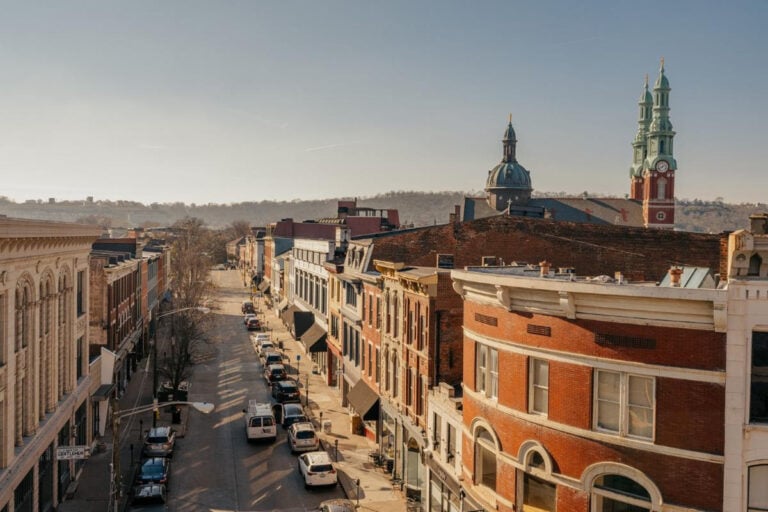
The Independence location gives this statewide effort a particularly local test. An event at 1700 Declaration Drive was not an abstract statement about generosity somewhere in Kentucky. It is a recognizable place with a date and a short window of time. The people who can stop there may come from different neighborhoods, churches, backgrounds, and political views. They do not have to settle their differences to recognize the shared importance of a meal. A public gathering can be open to everyone without demanding that everyone think alike.
I hope the most durable memory of the Cram the Cruiser drive is not the spectacle of how much can fit into a vehicle. It is the picture of a community learning that public responsibility extends past the exciting moment: from the people who collect to those who organize, from the people who distribute to the households whose privacy and dignity deserve protection. Jesus' lesson about the Samaritan ends with a call to practice mercy, not merely admire it. That call does not require an emergency. Sometimes it begins in a supermarket parking lot, in daylight, while ordinary people make room for one another.
Douglas Vandergraph is a Christian writer, speaker, and longtime project manager based in Fort Collins, Colorado. A husband and father, he writes about faith, human dignity, perseverance, and the everyday choices that make communities more welcoming. His work has appeared in publications in the United States and internationally. More of his writing can be found at https://douglasvandergraph.com.