












By Paul A. Tenkotte, PhD
Special to NKyTribune
The off-year congressional elections of Tuesday, November 2, 1926, served as a bellwether for Kentucky’s political future. While Republicans still held considerable strength, the results revealed the beginnings of a Democratic resurgence across much of the Commonwealth.
The backdrop of the significant shift in Northern Kentucky politics dated two decades earlier, in 1903. During the late-nineteenth and early-twentieth centuries, Covington’s municipal government operated under a system known as “boss rule” or “machine politics.”
Powerful political leaders, known as bosses, exercised extensive control over city government, from elections and public contracts to the hiring of loyal supporters for police, fire, and other municipal positions. The Democratic machine dominated Covington “Kenton King” and “Boss Bill.” Following William Goebel’s contested gubernatorial election and assassination in 1900, the organization split into rival camps, weakening the unity that had long characterized Democratic politics in Northern Kentucky (Tenkotte, Claypool, and Schroeder, eds., “Gateway City: Covington, Kentucky, 1815- 2015.” Covington: Clerisy Press, 2015, pp. 93-102).
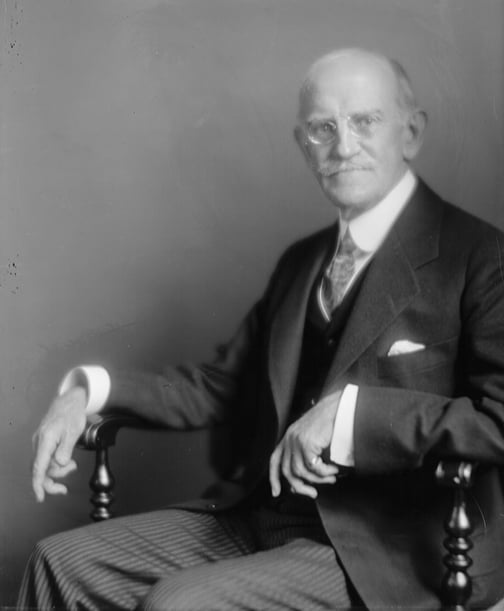
Boss rule in metropolitan areas such as Cincinnati and Covington proved remarkably nonpartisan, resistant, and transcendent of state boundaries, including the Ohio River. Covington’s Democratic political machine had maintained close ties with the notorious Cincinnati organization led by Republican George B. Cox (1853–1916), better known as “Boss Cox.” As “The Kentucky Post” observed on November 12, 1903, the Cincinnati Republican machine dispatched “floaters” to vote in Covington elections, while Covington’s political bosses returned the favor by sending voters across the river to participate in Cincinnati contests.
In 1903, Northern Kentucky Republicans succeeded in breaking the grip of Democratic boss rule in Covington and Kenton County. In the November elections, Republican candidates swept municipal and county offices, including that of Covington’s mayor.
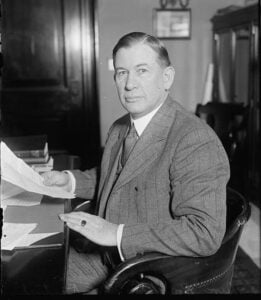
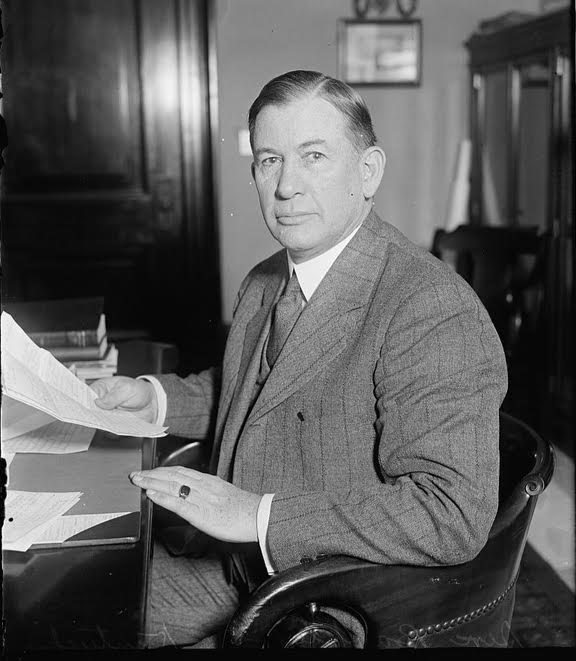
One of the up-and-coming Republican politicians was Richard Pretlow Ernst (1858-1934) of Covington, who belonged to a wealthy and influential Northern Kentucky family. He received his law degree from the University of Cincinnati in 1880 and subsequently practiced law in both Covington and neighboring Cincinnati. His successful career culminated in his election to the United States Senate from Kentucky in 1920.
Six years later, the election of November 2, 1926, dealt a devastating blow to Richard P. Ernst’s political career. Although he retained strong support in Kenton and Campbell Counties, voters across much of Kentucky rallied behind Democratic challenger Alben W. Barkley (1877–1956). Even Louisville, which had supported Ernst comfortably in 1920, slipped from his grasp. Barkley’s victory marked the beginning of a remarkable rise in national politics. During the 1930s, he emerged as one of the foremost advocates of the New Deal and later served as Vice President in the administration of Harry S. Truman.
On the afternoon of November 3, 1926, “The Kentucky Post” interpreted the early election returns as pointing toward a victory for Barkley. In a brief but revealing assessment, the newspaper argued that “The defeat of Senator Ernst, if the early returns are substantiated, was due entirely to the work of the railroad brotherhood organizations and to the injection of the soldiers” bonus vote into the campaign.”
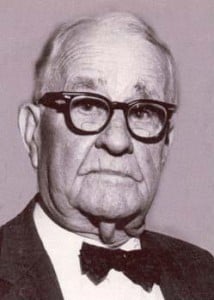
My research has not uncovered a clear connection between Senator Ernst and organized opposition from railroad labor unions. It is possible that Ernst suffered politically because voters associated him with the Republican administrations of Presidents Harding and Coolidge. During the 1920s, labor organizations frequently supported Democratic candidates and opposed Republicans, regardless of an individual candidate”s specific voting record.
However, the issue of veterans’ compensation remained politically potent throughout the 1920s. In 1924, Congress enacted the World War Adjusted Compensation Act after vigorous lobbying by the American Legion. That organization argued that millions of veterans had sacrificed years of civilian earnings while serving their country for relatively modest military pay. At the same time, wartime inflation had sharply increased the cost of living, while many businesses prospered from government contracts. Veterans returned home only to encounter the severe recession of 1920–1921, which brought unemployment, falling farm prices, and widespread economic hardship.
The World War Adjusted Compensation Act sought to provide veterans with additional compensation for wages and opportunities lost during their military service, effectively doubling the $1 per day earned by servicemen stationed in the United States and the $1.25 per day paid to those serving overseas. Veterans’; organizations objected to describing the legislation as a “bonus,” insisting that the payments represented compensation they had rightfully earned through their service and sacrifice.
Although President Calvin Coolidge vetoed the World War Adjusted Compensation Act, Congress overrode his veto and enacted the legislation. Senator Richard P. Ernst, however, voted against overriding the veto, a position that left him politically vulnerable in the 1926 Senate race when Alben Barkley repeatedly highlighted Ernst’s opposition to veterans’ compensation. Missing from Barkley’s campaign narrative was the fact that Ernst’s only son had served on the front lines during World War I. Ernst’s opposition to the bill was not rooted in hostility toward veterans but in his belief that Congress had failed to provide a means of paying for the program’s substantial costs (“Spiking Guns,”; “Kentucky Post,” October 16, 1926, p. 4).
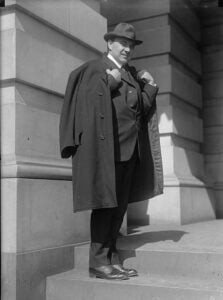
In addition, the November 1926 election proved pivotal, ensuring that Democrats would retain Northern Kentucky’s Sixth Congressional District seat in the U.S. House of Representatives. Earlier that year, Orie S. Ware (1882–1974), the Kenton County Commonwealth Attorney, had defeated Brent Spence (1874–1967) in the Democratic primary.
In the general election, Ware carried seven of the district’s eight counties, defeating Republican candidate Emmett H. Daugherty. Ware succeeded longtime Democratic Congressman Arthur B. Rouse (1874-1956), who had represented the district for sixteen years, from 1911 to 1927 (“Ware Is Named to Congress,”; “Kentucky Post,” November 3, 1926, p. 1). (See this NKyTribune Rich History column.)
In Northern Kentucky, Republican strength endured for several more years. Statewide, however, early signs of political and economic discontent were already beginning to emerge.
Although the stock market crash of 1929 remained three years away, a growing populist sentiment had begun to surface beneath the apparent prosperity of the Roaring Twenties.
While economic growth enriched many urban businesses and industrial interests, farmers, railroad workers, and veterans increasingly questioned whether the benefits of that prosperity were being shared equitably. In Northern Kentucky, voters witnessed the defeat of their hometown Senator but retained a Northern Kentucky House seat. Elsewhere across the Commonwealth, voter concerns helped propel Alben Barkley to victory and foreshadowed the political realignment that would accompany the New Deal era during the Great Depression.
Paul A. Tenkotte, PhD is Editor of the “Our Rich History” weekly series and Professor of History at Northern Kentucky University (NKU). To browse more than ten years of past columns, click here. Tenkotte also serves as Director of the ORVILLE Project (Ohio River Valley Innovation Library and Learning Engagement). For more information see https://orvillelearning.org/ He can be contacted at tenkottep@nku.edu.