











By Paul A. Tenkotte, PhD
Special to NKyTribune
When I was about nine years old, my grandmother, Katherine Meier, gave me the most precious possession I have ever received. It had little, if any, monetary value. After all, Grandma Meier was a woman of modest means. Her husband, August, died in January 1943, leaving her to raise the youngest of their nine children, my mother Mary. Social Security, one of the most enduring programs of Franklin Roosevelt’s New Deal, provided enough income to help her keep the family together.
Only twelve years old when her father died, Mary found herself at the center of a difficult family discussion. While well-meaning relatives visited to offer advice, her mother sent her upstairs. Listening through the heating ducts, Mary overheard the conversation below. Several relatives urged Katherine to place her daughter in an orphanage. Katherine steadfastly refused. Years earlier, after the death of her own mother, she had been confined to an orphanage herself and had no intention of allowing history to repeat itself.
What could a poor grandmother possibly give me that became so priceless?
I was a thin, bookish little boy. Whenever I visited Grandma, usually accompanying my parents as they brought her groceries or homemade food, I inevitably wandered into her dining room. There stood a small four-shelf bookcase with glass doors. I was free to examine any book that caught my attention.
Occasionally, Grandma would bring out a small wooden box filled with old photographs and postcards. I would spend hours marveling at the unfamiliar faces, long-vanished buildings, and scenes from a world that seemed both distant and strangely familiar.
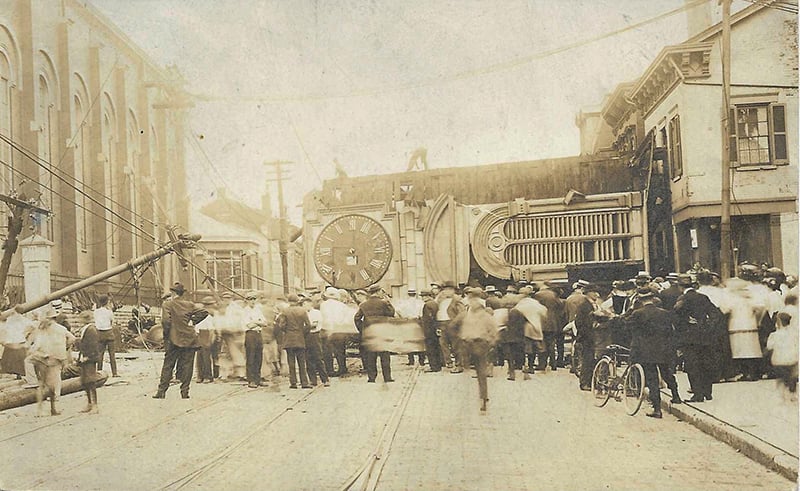
One day, I spotted a postcard of old St. Joseph Catholic Church at Twelfth and Greenup Streets in Covington, Kentucky, its magnificent spire torn from the church and lying across the street. I held the postcard in my hands for a long time, trying to imagine what had happened. Seeing my intense interest, Grandma lovingly placed her hand on my shoulder and told me that the steeple had toppled during the 1915 tornado that struck Covington. At that moment, the postcard became more than a picture. It became a story.
Then she looked at me with loving eyes and asked, “Would you like to take that postcard home with you?”
I was delighted.
More than fifty years later, I still have it.
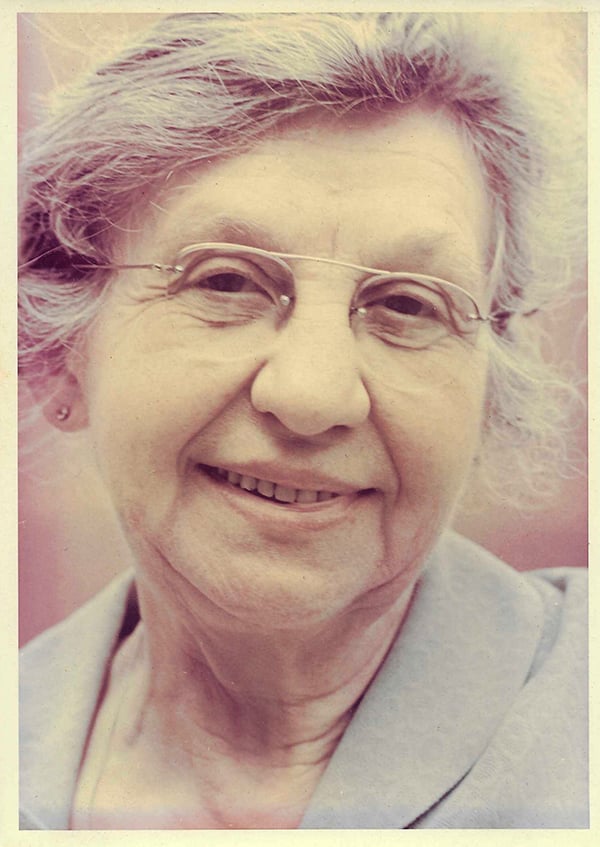
Grandma Meier died only a few years afterward, when I was twelve years old. She never knew that her gift of a simple postcard would help shape the course of my life. Yet looking back, I can trace my fascination with history to moments like that one in her dining room. The curiosity she nurtured eventually led me to earn a PhD in History and to devote a lifetime to teaching, research, and writing.
This week’s “Our Rich History” column marks a milestone I never anticipated when I began writing as a volunteer for the “Northern Kentucky Tribune” in May 2015. It is the 600th article in the series.
The number itself is difficult for me to comprehend. Since the first column appeared, I have written about streetcars and steamboats, churches and schools, businesses and neighborhoods, political campaigns and military service, floods and celebrations, triumphs and tragedies. The subjects have ranged across generations and the Ohio River Valley itself. Numerous guest authors have contributed.
Yet after 600 columns, the most important lesson is not how much has been written. It is how much remains undiscovered.
People occasionally ask where the ideas for these articles originate. There is no single answer. Some began with a faded newspaper clipping. Others emerged from a photograph, a family story, a forgotten grave marker, a church anniversary booklet, a city directory, or a question posed by a reader. Many started with little more than curiosity.
Who built that structure?
Why did that business disappear?
Who was the person behind a familiar street name?
What became of a once-prominent institution?
History often begins not with answers but with questions. During the past 600 columns, I have spent countless hours examining newspapers, census records, maps, books, manuscripts, and archival collections. Repeatedly, I have been reminded that the stories we know today survive only because someone chose to preserve them yesterday.
For that reason, the most important number connected to this milestone may not be 600.
It may be 1.
• One photograph saved in a family album.
• One diary tucked away in a drawer.
• One bundle of letters preserved by descendants.
• One church volunteer who maintained careful records.
• One librarian who protected local collections.
• One volunteer who organized historical materials.
• One reader willing to share a memory.
• One grandmother who gifted her grandson with a postcard.
Time and again, a single document or recollection has opened an entirely new window into Northern Kentucky’s past.
The experience has also revealed recurring themes. The Ohio River appears throughout our history not as a barrier but as a connection. Successive waves of newcomers helped shape our communities. Transportation repeatedly transformed local fortunes, whether through turnpikes, railroads, aviation, steamboats, streetcars, bridges, or highways. Ordinary citizens often left extraordinary legacies. Institutions endured because generation after generation cared enough to sustain them.
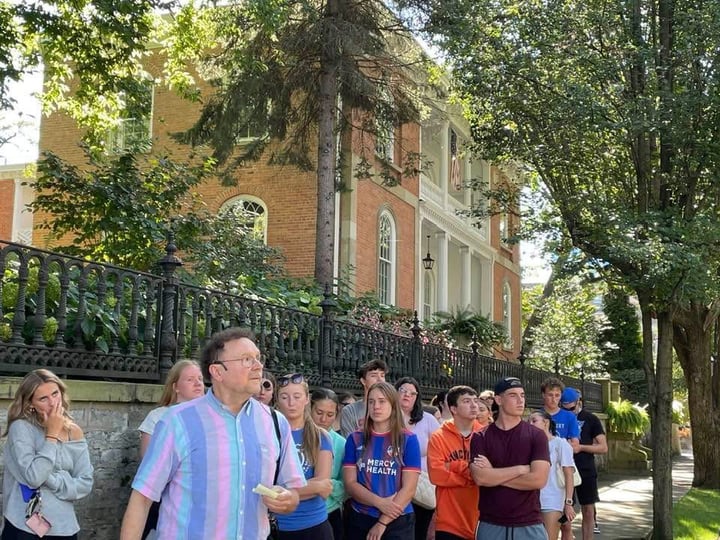
Perhaps most surprising is how frequently history hides in plain sight. Thousands of people pass historic buildings every day without knowing the stories they contain. Families possess photographs and diaries whose significance has been forgotten. Old newspapers preserve accounts of people who once filled headlines but have since vanished from public memory. Entire chapters of local history await rediscovery.
Even after 600 columns, there are far more stories left untold than stories already written.
Somewhere in Northern Kentucky, an unidentified photograph rests in an album. A letter remains unread in a box. A scrapbook sits on a shelf. A family preserves memories that have never been shared beyond a living room conversation. Future articles, future books, and future historians may all emerge from such discoveries.
That reality is encouraging. It means our rich history is not a finished subject. History is not merely about the past. It is the ongoing effort to understand the people, places, and events that shaped the communities we inherit. Each generation assumes responsibility for preserving those stories before they disappear.
As I reflect on this 600th column, I am grateful not only for the opportunity to write these articles but also for the authors, individuals, families, libraries, archives, museums, historical societies, and readers who have helped preserve Northern Kentucky’s collective memory. Without their efforts, many of these stories would have been lost.
Six hundred columns later, the most important conclusion is simple. Northern Kentucky’s history remains as rich as ever. And somewhere nearby, the story that becomes column number 601 is still waiting to be discovered.
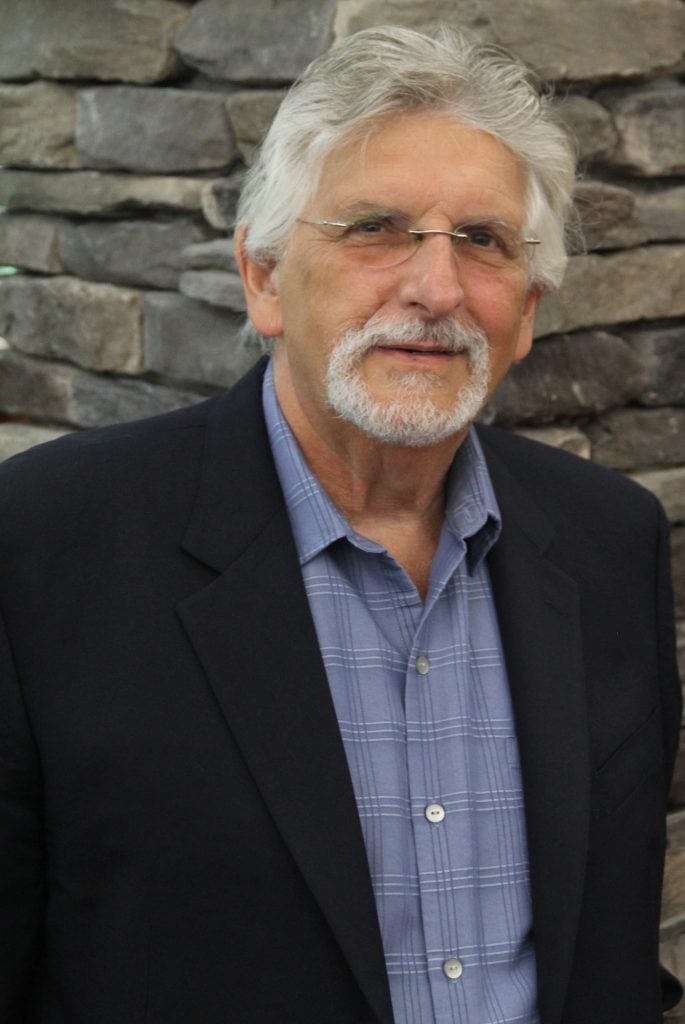
Paul A. Tenkotte, PhD is editor of the “Our Rich History” and professor of History at Northern Kentucky University (NKU). Tenkotte also serves as director of the Ohio River Valley Innovation Library and Learning Engagement (ORVILLE) project. He can be contacted at tenkottep@nku.edu.