















What if the craft of journalism turns out to be one of the very things that preserves our republic? Do traditional news sources have a distinct role to play in protecting the principles on which our nation was founded?
It’s something to think about the next time you read the Globe Gazette, listen to Bob Fisher on AM 1300 KGLO, or engage with serious journalism.
The question came up during a recent book club discussion at Epiphany Catholic Parish, where we are studying Pope Leo XIV’s landmark first encyclical, Magnifica Humanitas, on artificial intelligence (AI).

Leo expresses concern that AI can blur the distinction between truth and falsehood, making it increasingly difficult to distinguish fact from fiction.
“Indifference to the truth leads, slowly but surely, to a descent into totalitarianism,” he writes.
Quoting political philosopher Hannah Arendt, he observes that the ideal subjects of such regimes are people for whom “the distinction between fact and fiction … and the distinction between true and false … no longer exist.”
One solution, he suggests, is to strengthen “serious journalism and forums for debate, where reasoned argumentation and verification carry greater weight than immediate reaction.”
That passage struck a personal chord.
It troubles me to hear traditional news organizations casually dismissed as purveyors of “fake news.” When I studied at the University of Cincinnati and later as a working journalist, my professors, editors and fellow reporters believed deeply in fact-checking, fairness and the responsibility to get the story right.
A thief thinks everybody steals.
That doesn’t mean journalists don’t make mistakes. Reporters get things wrong, and I certainly made my share of mistakes during my career. The difference is that responsible journalism has standards, including a willingness to correct errors and be held accountable.
I was fortunate never to feel personally unsafe while working as a journalist. But reporters around the world routinely put themselves at risk, sometimes their lives, driven by a passion for finding the truth.
When politicians are quick to accuse the traditional media of “fake news,” I’m reminded of the old Danish proverb: “A thief thinks everybody steals.”
Leo also points to the importance of what he calls deep understanding as a corrective to the blurring of lines between fact and fiction.
“As Plato wrote, the deepest and most important things are learned only after much time and effort,” he writes. He describes how, through discussion with others, we strike ideas and experiences together “like flint until the spark of understanding is kindled within us.”
Having just returned from a pilgrimage to the birthplace of democracy, permit me an aside.
Ancient Athens placed great importance on public gathering places like the Agora, where citizens could meet, exchange ideas and debate matters affecting their community. The importance of face-to-face encounters across differences may be even greater today, as our society becomes increasingly fragmented by digital communication.
This is one reason thriving communities like Mason City must continue to invest in places that bring people together.
It also was not lost on me that the leader of the Catholic Church quotes Plato, who lived nearly four centuries before the birth of Christ. Platonic thought had a profound influence on the development of Christian theology. Raphael’s famed School of Athens, depicting the wisdom of ancient philosophers, is among the treasures of the Vatican’s Raphael Rooms. It is a remarkable reminder of the Church’s historic engagement with the wisdom of the ancient world.
Leo also emphasizes critical thinking as essential to better decision-making and problem-solving.
“Without careful attention, an educational system lacking in love for truth may emerge,” he warns. “As knowledge becomes increasingly fragmented, it becomes difficult to grasp reality as a whole, to ask profound questions about meaning, or to develop authentic, critical and creative thought.”
Critical thinking means actively analyzing, questioning, evaluating and synthesizing information to make sound judgments rather than accepting claims at face value. In an age of instant information and AI-generated content, that ability may be more important than ever.
What one person can do
Leo concludes with some bold advice for those who wonder what one person can do to make a difference.
“Let us invest in education beginning with ourselves,” he urges, challenging us to be the change that we would like to see.
He also calls on each of us to cultivate relationships and cherish places and times where physical presence remains essential. “The human heart retains an irrevocable need for genuine closeness.”
This only scratches the surface of Magnifica Humanitas, Pope Leo XIV’s substantial encyclical on safeguarding the human person in the age of artificial intelligence. Addressed not only to Catholics but to “all men and women of goodwill,” it challenges us to protect human dignity amid rapid technological change and to put the common good at the center of our social, economic and political lives.
So, can journalism save our republic?
Perhaps journalism alone cannot. But a republic cannot long survive without a shared commitment to truth, an informed citizenry and places where people can come together to exchange ideas, challenge assumptions and disagree respectfully.
Those are not simply the responsibilities of journalists. They are the responsibilities of citizenship.
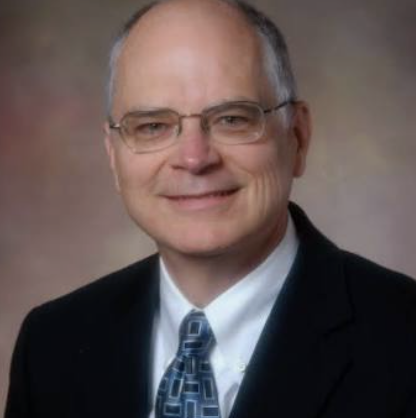
Bill Schickel was born in Loveland, Ohio, graduated from the University of Cincinnati, and started his journalism career as a reporter for The Cincinnati Enquirer. He now lives in Mason City, Iowa, where he recently retired as the city’s longest-serving Mayor. Along the way, he was a news anchor, producer, assignment editor, and reporter for the CBS television affiliate, KIMT-TV and an editor and reporter for The Globe Gazette in Mason City. He also served three terms in the Iowa State legislature. He is the older brother of NKY’s John Schickel. This commentary first appeared on Bill Schickel’s SubStack page and is reprinted with permission.