









(Note: I share this story with Milly’s strong support in the hope it might help others in similar circumstances.)
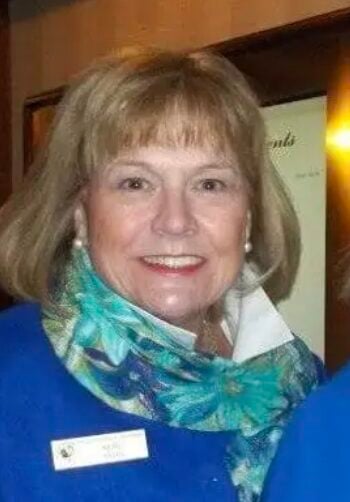
About three years ago Milly had an incident while driving. Realizing she was lost, she sat in front of a house for an hour, until someone came out and asked if something was wrong. The woman wound up getting in her car and leading Milly out to a familiar major highway.
That incident, along with some memory lapses that had been occurring, led us to raise the issues with her primary care doctor. He did some preliminary testing, then advised further testing.

Getting the further testing proved challenging. The first appointment we could get was six months away, through a NKY neurology physicians group. I called the Brown Sanders Institute at UK, the Gardner Neuroscience Institute at UC, and the Neurology program at Ohio State University. Nobody could do it sooner.
So six months later we got the testing. The preliminary finding was dementia. At that point, upon the strong urging of trusted resources, we contacted Dr. Emerlee Timmerman at UC about taking Milly on as a patient. Happily, she did so.
She immediately prescribed further testing, involving a PET scan of the brain, a spinal tap, and a sleep test for apnea. These tests included markers for more specific types of dementia. Milly had the tests, and the finding was definitive.
Alzheimer’s.
So began the adoption of various lifestyle changes, along with the intensification of some we had already undertaken.
For Milly it meant a lot less outside activity coupled with dealing with short-term memory lapses. These ran from the sad to the funny to the ridiculous.
For me it meant a major change in my activities. I have been an activist throughout my adult life, as a legal aid lawyer, law professor, school board member, Democratic Party activist, and member of numerous boards.
I had retired from legal aid but was continuing to teach poverty law. I had to give that up. I cut back on boards, although I took on two new ones that resulted from gubernatorial appointments. Happily, they have worked out schedule-wise.
In a word, I transitioned from activist to caretaker.
This was a new role for me. Milly had handled many of the domestic chores. I would not have predicted that the transition to caretaker would be easy.
But it was. For whatever mix of reasons. I was basically finished with some things and ready to let them go. Milly and I like each other, and like some of the same things – we are both political junkies and like the same cable news stations.
There are challenges. Milly has suffered from clinical depression her entire life. It has been masked most of the time by her extroverted personality. It is a physical condition, not due to external circumstances. Although she does often say, regarding our current political environment, that if you’re not depressed, you’re not paying attention. The combination of dementia and depression presents some unique challenges.
Milly is very much aware of her condition. More so than usual, we have been led to believe. It is a mixed blessing. We can talk honestly with each other and with others about our situation. But she will at times burst into tears, and if I ask what’s wrong, she will say she is losing part of herself. I feel helpless at that, as it is basically true. If I express frustration, as I sometimes do, she says, if this were you, you would be going crazy. And she’s right.
This has all been by way of introduction to some thoughts about our situation.
First: I do not find caretaking overwhelming. People often say, and most of what I have read says, that Alzheimer’s is harder on the caretaker than the sufferer/patient. I have not found that to be true, at least not yet. I hurt when Milly suffers – not from her asking the same question multiple times, but from her depression. And knowing Alzheimer’s inevitable trajectory.
Regarding medical care, Milly is taking the most recent FDA approved drug for Alzheimer’s, Kisunla, which does not cure but slows the progression of the disease. It is the best treatment available at this time, and we are grateful for it.
We have been very fortunate with our medical providers. Dr. Ben Smith, our primary care doctor, has been wonderful to work with. As has been Danni Ortega, our counselor. They both work with both of us and have been very helpful.
It is difficult to see the future clearly. We are in our late 70’s. We’ve no idea what our timeline is, whether from the disease or from the normal progression of aging.
What we do know is this: something comes to all of us. We do not choose it. Our grace comes from how we deal with it.
We are dealing with this hand we’ve been dealt as forthrightly as we can. Fortunately, while we are by no means wealthy, we have sufficient resources that we think we will be able to deal with costs if/when institutional care becomes necessary.
To that end, we have visited some assisted living facilities and talked with in-home caregivers. We are trying to have plans in place for various contingencies.
Let me conclude in this way. Something unwanted does come to all of us. None of us get out alive. It’s a matter of what and when.
We try to plan, to be ready. But in the meantime, we live our life. We are not hermits. We see family and friends frequently, and many have been very good about reaching out to keep relationships vital. A cardinal rule of dealing with dementia is socialization. Another is exercise – which we are less good at.
In actuality, most of our time is spent together here in our living room, Milly on the couch, me in the chair. We talk. We laugh – especially at our dog Theo, who provides great joy and keeps us grounded. Sometimes we cry. We watch our shows and carry on arguments with the talking heads. I write my essays on my phone.
We would not have chosen this life. Nobody in their right mind would. But we are accommodating to it. And finding more satisfaction from it than one might have thought possible.
Col Owens and Milly Diehl live in Fort Mitchell and have been active in the Northern Kentucky community for their lifetimes. Col is a retired legal aid attorney and law professor, author of Bending the Arc Toward Justice, longtime Democratic Party activist, and member of the Boards of Directors of Gateway Community and Technical College and the Kentucky Board of Elections. He is an occasional columnist for the NKyTribune.