









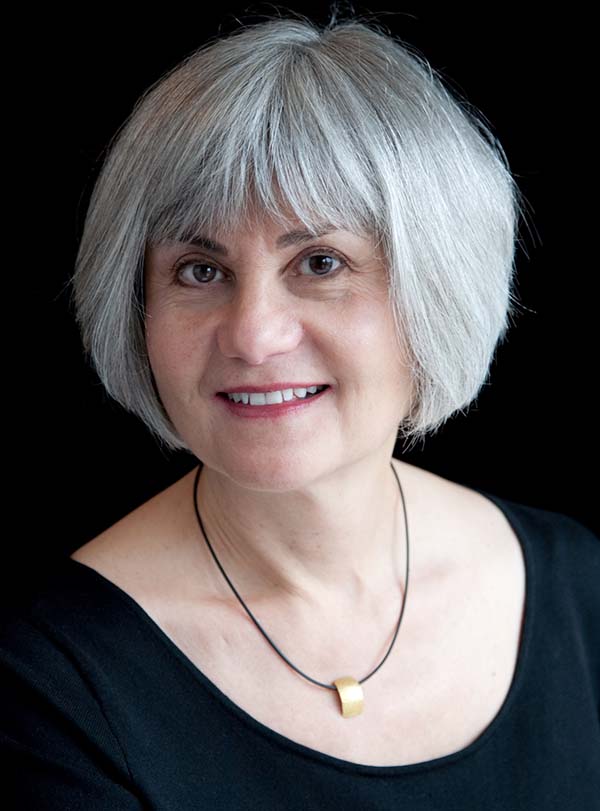
Someone recently contacted me about the inspiring example of Bonnie Covey, a 77-year-old Louisville native, who started losing her hearing in her late twenties.
Doctors were not sure why. Her condition soon compounded challenges of everyday life. Tasks such as using the phone, talking while in restaurants, and going to a movie proved frustratingly difficult. Consequently, she changed her real estate career to starting a staging company, less of a burden for her profound hearing loss.
Years later, in 2013, Bonnie was introduced to a mechanism designed to help her navigate daily life activities in an improved fashion — the use of cochlear implants.
What are cochlear implants? According to the Kentucky Commission on the Deaf and Hard of Hearing (KCDHH), a cochlear implant “is a small, complex electronic device that can help to provide a sense of sound to a person who is profoundly deaf or severely hard-of-hearing. The implant consists of an external portion that sits behind the ear and a second portion that is surgically placed under the skin.”
Though I am totally unqualified to personally endorse the use of this hearing adaptation (my knowledge of such is very limited), I had the opportunity to talk with Bonnie via email about her cochlear implant experience, and she shared positive things.
“Before my hearing was restored (in 2013), I relied on other people to help me hear,” she said. “I would ask them to slowly and clearly repeat what was said. I also used noise cancelling headphones connected to my telephone. I used a bed shaking ‘alarm clock.’ I used closed captions or subtitles on the TV.”
Those adaptations were helpful, but now, with her cochlear implants, she noted, “I can stream directly from the phone and TV. Streaming is extremely clear. I was able to hear music before, (and) now I love to stream songs. My life is much easier with the implants. I don’t get exhausted struggling to hear.”
Bonnie has sought to “give back” in appreciation.
“I have been volunteering with Cochlear North America (NA) since 2014,” she noted. “I speak to implant candidates who are referred to me by my engagement engineer at Cochlear NA.” She shares her experiences with the implant process, from pre-surgery through activation. “The candidate and I may have more than one conversation. I want to stress that I can only discuss my personal experiences. Each person will make their own decisions and will have their own story.”
Bonnie notes that a cochlear implant is different from “normal” hearing.
“What I heard when my processors were ‘activated’ (turned on) sounded like beeps or bells or whistles. Recipients’ brains will adjust to this new way of hearing. It takes time and patience, practice and listening rehab,” she said.
But it might not be an easy process for those who say yes to cochlear imprints.
“It can be a challenging period for new recipients who are eager to hear,” she continued. “Again, each person has their own time frame but within a few weeks to months the brain will become retrained. Sounds will become more natural and easier to understand.”
Along with the help of appointments with their audiologist, Bonny said they “’map’ (or program) the implant and processor and fine tune sound to a recipient’s needs. I frequently tell candidates that this is not like putting on a pair of glasses and seeing clearly right away. Hearing with an implant takes time.”
She’s often asked what hearing with a cochlear implant sounds like. “For me, hearing with my implants sounds natural and normal. I can recognize people’s voices. I can hear birdsong. My implants have been life changing,” she said.
Bonny was recently appointed by Kentucky Governor Andy Beshear to the KCDHH as a private citizen. The mission, she said, “is to provide effective and efficient leadership, education, advocacy and programs to eliminate barriers and to meet the social, economic, educational, cultural, intellectual and health and human services needs of the deaf and hard of hearing Kentuckians. I will follow and work for these life enhancing goals for Kentuckians and am honored to be appointed to the KCDHH.”
For more information on cochlear implants, email concierge@cochlear.com.