










By Steve Flairty
NKyTribune columnist
Trees have always interested me, starting as a child. So recently, when a teacher requested me to sub for her and gave me a choice of one of two days, I chose the Arbor Day activities one. On that day, I expect my time with fourth grade students will be imbued with passion.
I’m a card-carrying member of the Arbor Day Foundation, and I’m told they have a program for juniors. Something like that would have fit me back in the 1960s.

The earliest fascination I can recall of those days was noticing the tree seeds seemingly flying away on missions from the huge maple tree sitting in front of the side entrance of Grant’s Lick Elementary School. I was in the first or second grade. I called those little airborne things “helicopter seeds” because of their twirling motion, giving them more umph to travel further and to start new trees safely away from the abundant blacktop all around the school. My developing mind figured I had discovered this phenomenon, and I might become famous.
Oh, well.
Not only maple trees, but I took a liking to white dogwood trees pretty early, too. They usually bloomed at Easter and the Claryville woods around the Flairty home was full of ‘em. The trees tend to be a little difficult to transplant and keep living, but I remember as a teenager digging up a couple dogwoods at a neighbor’s place and replanting them in our back yard. The one near our propane gas tank survived and was beautiful. Somewhere in my house there is a photo with me standing aside it, but I digress.
Growing older, I once gifted my dear Aunt Mae, living in Butler, with a flowering crab tree and often stole a glance at the tree sitting near her driveway as I passed on the way to college at EKU. After graduating and taking my first classroom position at Trapp School, in rural Clark County, I ordered, at a very low price, 500 scotch pine trees from Kentucky’s state forestry program. I planted some on a ten plus acre plot of cheaply priced land I owned three miles from the school. Not sure any survived, but I gave many away also and hope, some fifty years later, that a few are growing today.
In present time, I count twenty-one trees growing on our one-acre plot in Versailles, and I’ve planted about seven of them since we moved here in 2016. Included are three redbuds, two white dogwoods, and my most prized ones being a former state tree, the Kentucky coffee tree, plus a couple of the current state tree, the tulip poplar. Note that our state animal, the gray squirrel, and the state bird, cardinal, also make frequent appearances in our yard!
I always feel good about the creative act of planting a tree. Here are some positive effects of a thriving tree, according to the Arbor Day Foundation:
• Absorbs carbon dioxide and polluted air, then releases oxygen into the air.
• Prevents soil erosion and rainwater runoff.
• Saves money on air conditioning and heating by providing shade in the summer and shelter from cold winds.
• Increases your home’s value for both cosmetic and practical reasons mentioned above.
• Attracts wildlife, such as birds and squirrels.
• Reduces stress and anxiety, and reports are that it can even reduce the crime rate!
• Provides a gift to future generations.
For more information about specific trees growing in Kentucky and to check on what seedlings are available to buy, visit eec.ky.gov.
To help generate interest in trees with young people, I found these children’s books available, though I haven’t actually read any of them other than the Shel Silverstein one, a classic: The Giving Tree; also Trees, by Carme Lemniscates; Hello Trees, by DF Darwood, and Because of an Acorn, by Lola M. Schaefer. And, of course, for adults the written works of Kentucky natives Wendell Berry and Barbara Kingsolver give tribute to our natural world and showcase the importance of sustainable practices.
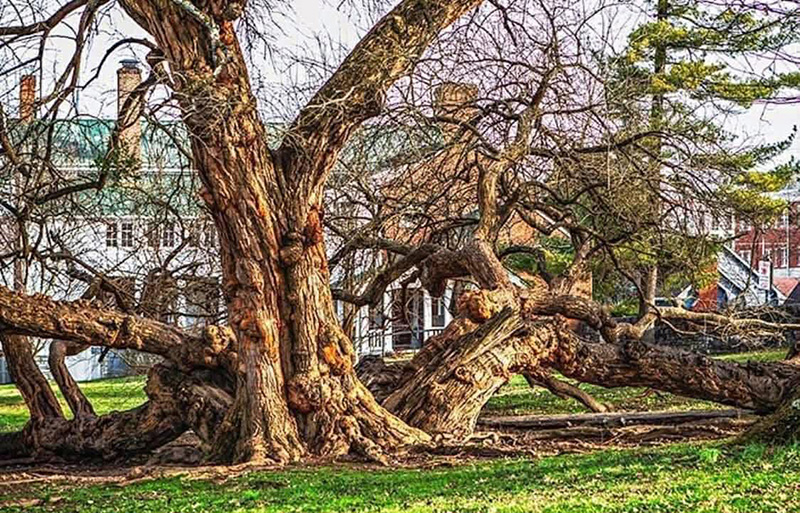
And hey, if making a day trip to see a special tree interests you, how about taking sight of a noted Osage orange tree, still alive after taking root in the late 1700s. It’s located at Old Fort Harrod State Park, in Harrodsburg, and is about 88 feet tall with a 76-foot-wide crown. Its trunk is reported to be twelve feet, four inches in circumference. It’s not a Kentucky native but is thought to have been brought to Harrodsburg by frontier settlers. The Old Fort Harrod web site calls it “a must-see landmark—a natural landmark linking past and present across two centuries.”
How about starting your own history with planting a tree or two soon, before the weather gets too hot? If you need some advice on how to do it correctly in case you are “stumped” (forgive me), call your local county extension service or contact a tree nursery.
Here’s hoping your Arbor Day, on April 24, will become more than a few words you read on a calendar.