














By Tom Latek
Kentucky Today
Harmful algal blooms can start appearing in Kentucky’s waterways as weather warms, causing health issues for those who come in contact, according to the Kentucky Energy and Environment Cabinet.
Algae occur naturally in all waterbodies and are a vital part of the ecosystem. When favorable conditions occur in a water body (e.g. excess nutrients, sunny conditions, warm temperatures and/or low-flow), many algae species may grow excessively, producing a nuisance bloom.
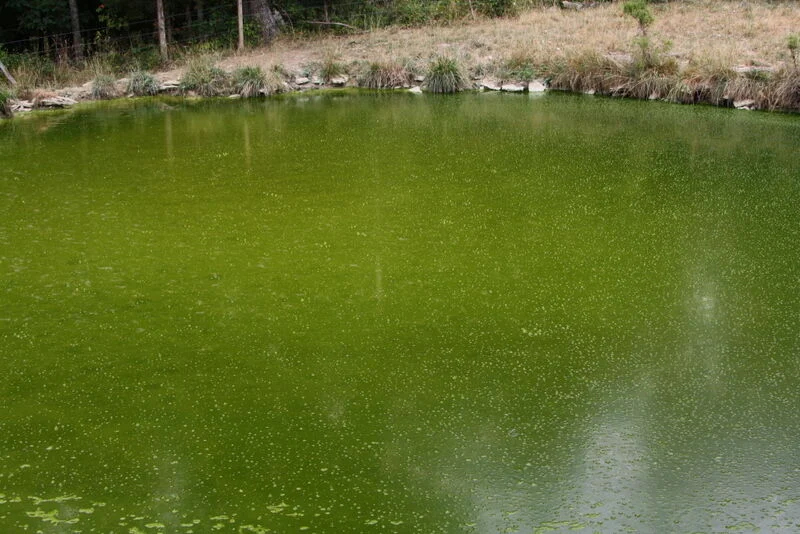
A harmful algal bloom, or HAB, occurs when toxin-producing cyanobacteria, also known as blue-green algae, grow excessively in a body of water. These bacteria can produce toxins which may affect the liver, nervous system and/or skin in animals or humans. Not all cyanobacteria produce toxins and some produce toxins only under certain conditions.
HABs can have a variety of different colors and looks. HABs may appear bright green, blue-green, brown, red and/or white in color. Some HABs may look like spilled paint, pea soup, parallel streaks and/or green dots or globs in the water. They often have a grainy, sawdust-like appearance upon closer inspection.
The following guidelines are recommended to avoid exposure to HABs:
• Individuals should avoid direct contact with affected water that has unusual color or where blue-green algae have been identified, including swimming, wading, paddling, diving, and water skiing.
• People who are prone to respiratory allergies or asthma should avoid areas with HABs. Children may be particularly sensitive.
• If you come into contact with water containing blue-green algae, wash off with clean, fresh water. In some cases, skin irritation will appear after prolonged exposure. If symptoms persist, consult your local health care provider.
• Fish fillets (not organs) may be consumed after the fillets have been rinsed in clean, non-lake water.
• Prevent pets and livestock from coming into contact with water where HABs are apparent.
If you are concerned that you have symptoms that are a result of exposure to HABs please see your doctor and call your local health department.
If you suspect that you have seen a HAB, please report the bloom to the Division of Water by calling 502-564-3410, or using the HAB Notification Survey Form. After hours and on weekends, you may contact the 24-hour hotline at 502-564-2380 or 1-800-928-2380.