








By Brenna Keller
NKyTribune associate editor
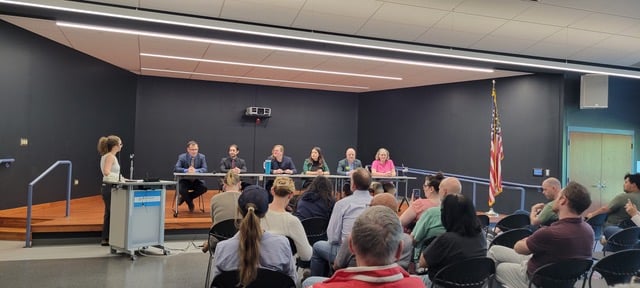
On Monday, the Rotary Club of Florence hosted an educational program on caring for seniors, featuring speakers from Homewatch CareGivers of Northern Kentucky. The program was titled “Caring for Our Seniors: Supporting Dignity, Movement, and Memory.”
 Homewatch CareGivers of Northern Kentucky provides non-medical in-home care for individuals of any age or ability. The services relevant to the Rotary presentation are elder care and dementia and Alzheimer’s care. According to their website, elder care services include transportation to appointments, medication reminders, and companionship. Dementia and Alzheimer’s care is provided by specially trained memory care experts.
The presentation began with Angi Harreld, a Community Outreach Manager with a background in fitness, wellness, and functional aging. Harreld’s role includes educating the community on the services Homewatch CareGivers provides.

Harreld noted that while all families face aging of parents and grandparents, not everyone has the time or ability to provide care as their loved ones age. That is where Homewatch CareGivers comes in.
In addition to in-home services, Homewatch CareGivers also provides fitness services to improve balance and stability. They have monthly educational events with a featured speaker. The next training is April 22, from 6–7 p.m., where Eric Vieth from Desmond Insurance will present on the cost of care, including strategies to fund care. Click here to register for this event.
Harreld emphasized the importance of being proactive versus reactive when planning for an aging person’s care. Proactive is knowing what is available and having a plan, while reactive is trying to come up with a plan quickly in a time of crisis.
Joining Harreld was Dementia Care Specialist Colleen Burns. She trains senior living communities on different ways to care for someone with dementia. One in ten Americans over 65 have dementia, which increases to around one in three with dementia at age 85. As Burns put it, “This is not just an issue, it’s an epidemic.”
With so many older adults experiencing dementia, there is a need for providing specialized care. People with brain change need to be approached differently.

Burns’ work focuses on the positive; what processing abilities do people with dementia still have that can be helped? Families often focus on the loss that comes with a loved one with dementia. For example, when their mother doesn’t know where a room is in the house she’s lived in for fifty years. Burns teaches families how to stay engaged and teaches professionals to build relationships prior to caregiving.
Burns stated that people with dementia lose every fourth word spoken to them. Therefore, talking continuously is not a useful tactic. Rather, it is important to combine verbal and visual elements. For example, miming eating while asking a person with dementia if they want to eat.
Even though it may seem like people with dementia are gone, according to Burns, “They’re still in there. There’s still who they were. They’re just a little different.”
Both speakers ended with advice. Burns emphasized the importance of getting help early when a loved one receives a dementia diagnosis. Harreld said everyone should lift weights (even small weights) three times a week. It’s never too late to start. She also challenged the audience to use their non-dominant hand while brushing their teeth. If that is too easy, they should brush their teeth while standing on one leg.
The overall message of the program was focusing on the positive when caring for our aging population. Caregiving with patience and compassion can improve the quality of life for people with dementia.