









By Paul A. Tenkotte, PhD
Special to NKyTribune
From the 1940s through the 1960s, Americans increasingly romanticized the traditional country doctor. In the postwar years, as suburbs expanded into formerly rural communities and medical advances fostered greater specialization and hospital-based care, nostalgia flourished. The itinerant physician who traveled from home to home making house calls was gradually disappearing from the American landscape.
Many of the doctors choosing to serve in rural communities in Northern Kentucky were trained at respected Cincinnati and Louisville medical schools. They often operated small offices on the first floor of their homes. Sometimes, their wives and children assisted in daily office tasks.
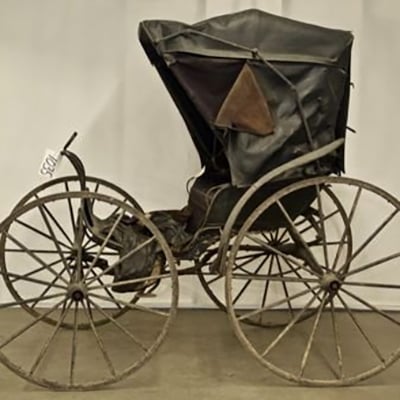
Of course, not every patient could travel to the doctor’s office. Some were too sick or too contagious. Others were infirmed, housebound, or bedridden. In an era when roads were often unpaved and barely passable in rainy or snowy weather, country doctors bravely traversed the rural byways to reach their ill patients. At first, they used horse-drawn buggies, also called physician’s phaetons. Later, they adopted automobiles.
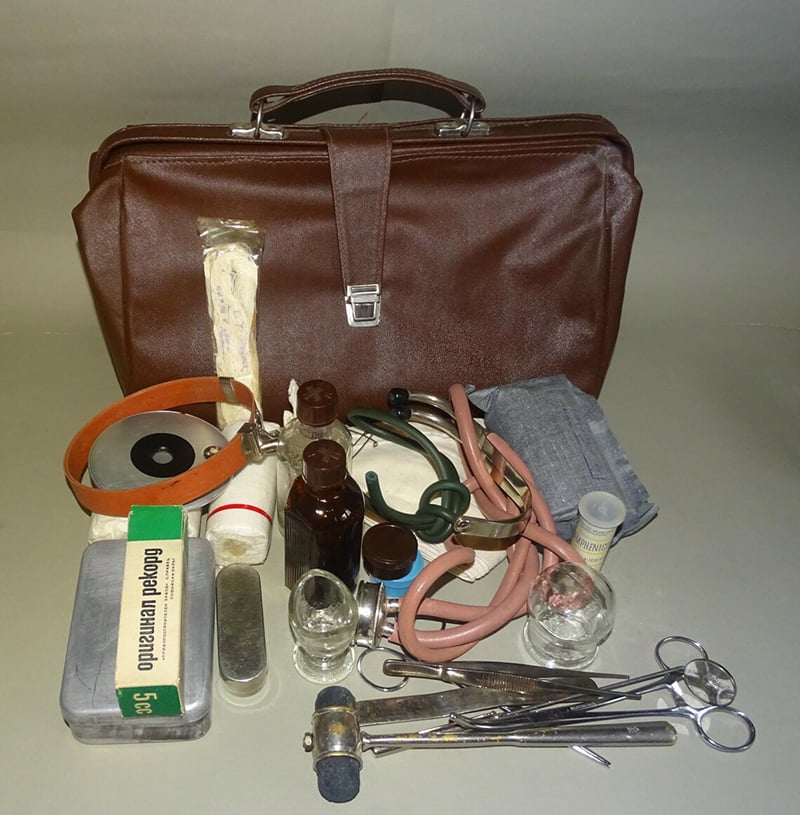
Of necessity, country doctors had many skills, ranging from performing emergency surgeries to delivering babies to pulling teeth and filling cavities if there were no dentists nearby. In addition, before the advent of modern medicines like penicillin, they often prepared their own pills, powders and liquid drops. The latter could be taken sublingually, that is, under the tongue.
Before the availability of health insurance, patients had limited means to pay for the country doctor’s services. For those who could afford, the doctor would charge a nominal fee that typically included medication. On other occasions, small rural communities collectively raised annual retainers, or subscriptions, to ensure that their doctor would receive a basic salary and continue to practice in their community.
Sometimes doctors accepted barter in payment, for example poultry, fruits and vegetables, firewood, and other goods. In instances when patients were unable to pay, country doctors treated the poor for free or set up payment plans for them.
The life of a country doctor was anything but glamorous. The work was demanding and relentless. They were on call around the clock, caring for patients through blistering summers and bitter winters alike. Vacations were rare, and financial rewards were often modest. Before pensions became common and Social Security provided some support, many had little choice but to continue working well into old age.
Others remained in practice simply because they loved their profession and could not imagine a life apart from serving others. Deeply committed to their patients and communities, many country doctors continued practicing far beyond today’s typical retirement age, with some still making house calls and treating patients into their seventies, eighties, and even nineties.
Northern Kentucky has been home to many dedicated country doctors, a few of whom are featured here. Some earned recognition in the “The Kentucky Post,” while others served their communities with little public attention. Regardless of their fame, their stories are compelling and provide a fascinating glimpse into a bygone era.
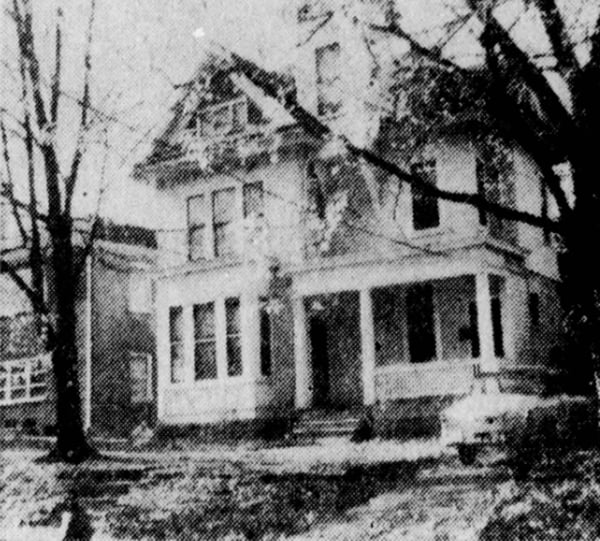
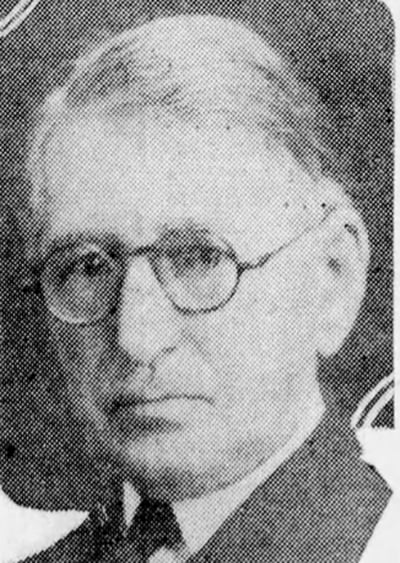
On December 8, 1939, the “The Kentucky” Post published a front-page story announcing the retirement of Dr. Charles Robert Slater, a “revered country doctor” of Erlanger. After graduating from Ohio Medical College in Cincinnati in February 1881, Dr. Slater established a medical practice serving Erlanger and Elsmere, then “railroad suburbs” in western Kenton County that were connected to Cincinnati by daily commuter trains. His home and office stood at 25 Erlanger Road on a lot he purchased in May 1899, near the Cincinnati Southern Railroad passenger depot.
During a career that spanned nearly sixty years, Dr. Slater provided “more than 400,000 professional treatments, either on calls or in his office,” and delivered “approximately 2800 infants.” Committed to keeping abreast of medical developments, he pursued post-graduate study “in New York” and at the University of Cincinnati. He also served as a physician for the Cincinnati Southern Railroad for more than three decades and was a member of the Kenton County Board of Health for over twenty years.
“The Kentucky Post” further noted that he was “primarily responsible for the installation in 1892 of the first telephone service connecting Erlanger with Cincinnati.” Dr. Slater died in 1944 at the age of 84. (“Veteran Erlanger ‘country doctor’ to retire after 58 years’ service,” “The Kentucky Post,” December 8, 1939, p. 1).
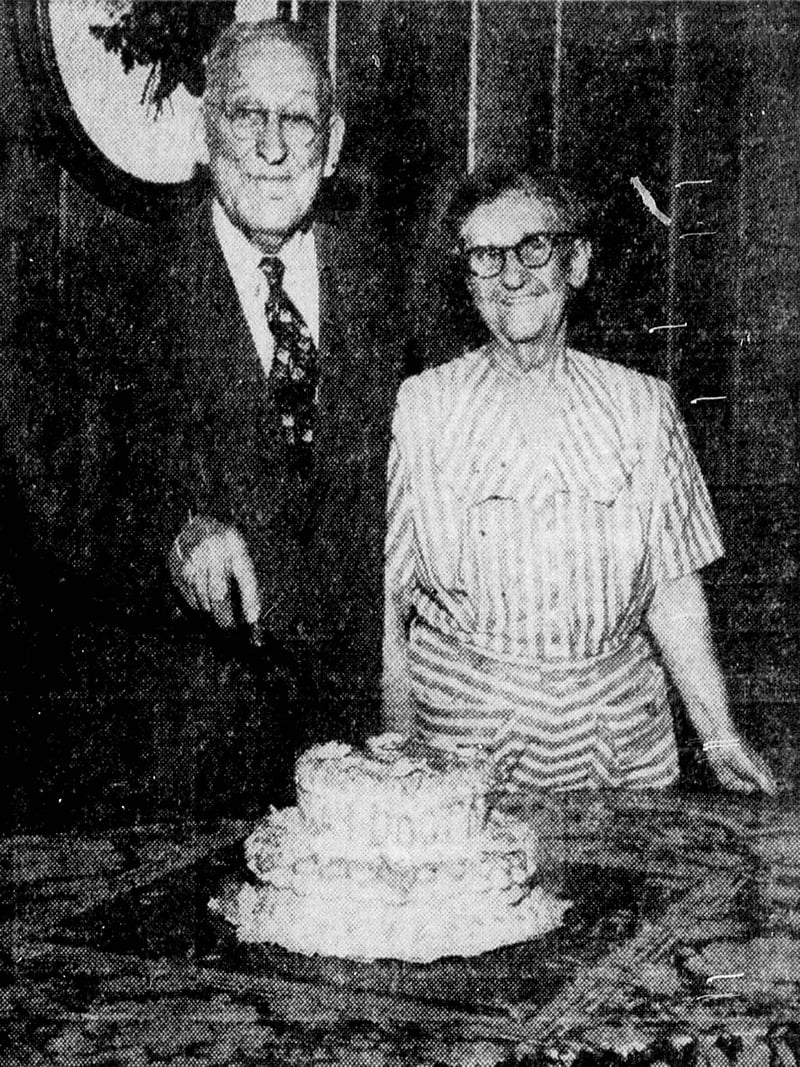
Dr. Charles Petty began his medical career in Montgomery, Ohio, after leaving medical school in the spring of 1895. A native of Kenton County he was born near the intersection of the old route of Taylor Mill Road and Fowler Creek Road. He later returned to the Independence area, where he established himself as a country physician. By December 1951, at age 86, he was still actively practicing medicine. Although he and his wife had retired to Florida several years earlier, homesickness led them back to Kentucky, where Dr. Petty resumed his medical practice in Independence.
Reflecting on the Spanish influenza epidemic of 1918, he remarked, “That was the worst,” adding, “Roads were not so good then.” Looking back on the demands of decades of house calls, he estimated that “I have nearly worn out at least 30 autos.” Dr. Petty continued to be remembered as one of the region’s dedicated country doctors until his death in 1957 (Burl W. Russell, “86-year-old country doctor will not retire; he’s happy in his new office,” “The Kentucky Post,” December 26, 1951, p. 1).
Dr. Samuel “Sam” Nunnelley was a well-known and respected figure in Boone County. His home, a large residence at 400 Bullittsville Road in Hebron, sat several hundred feet back from the road. A graduate of the University of Louisville Medical School, he established his medical practice in Hebron in January 1909, arriving “with $100 in his pocket.”
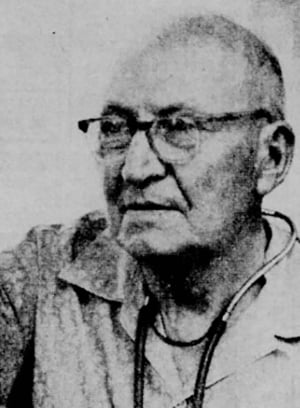
At the time, he was one of only thirteen physicians serving the county. Over the course of his long career, Dr. Nunnelley traveled to patients by a variety of means, including “horse, sleigh and Model T,” providing medical care and delivering more than 3,000 babies. Even at age 80 in 1964, he maintained a seven-day-a-week practice and continued serving the community until his death in 1967 (Ed Rust, “A country doctor — 3000 babies later!” “The Kentucky Post,” July 15, 1964, p. 13).
America’s country doctors were far more than physicians who made house calls. They were integral members of their communities, providing medical care while also serving as “a counselor to families on many problems, knowing intimately the lives of generations.” Their role extended beyond healthcare, making them trusted figures in the daily lives of rural families (“Another country doctor is gone,” “The Kentucky Post,” December 4, 1957, p. 4).
The importance of these physicians was reflected in the editorial response following the death of Dr. Charles Petty. As the editors observed, the demand for rural doctors remained pressing: “In the rural and in the hill and mountain country of Kentucky, we could welcome a great many new and young country doctors. But, alas, the ranks of the like of Dr. Petty are thinning fast.” Although those words were written in 1957, they resonate just as strongly in 2026, when the United States continues to confront growing disparities in access to healthcare across rural communities (“Another country doctor is gone,” “The Kentucky Post,” December 4, 1957, p. 4).
Paul A. Tenkotte, PhD is Editor of the “Our Rich History” weekly series and Professor of History at Northern Kentucky University (NKU). To browse past columns, click here. Tenkotte also serves as Director of the ORVILLE Project (Ohio River Valley Innovation Library and Learning Engagement). For more information see orvillelearning.org. He can be contacted at tenkottep@nku.edu.