










By Isabella Schultz
NKyTribune reporter
Tucked away in the back part of Thomas More University’s campus stands one of its most valuable assets.
The Thomas More University Observatory is described as a place where the general public can go to learn more about what goes on within the night sky, the universe, and beyond.
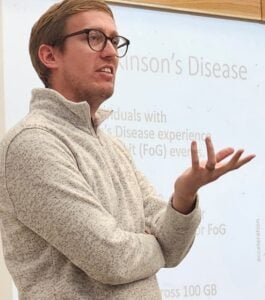
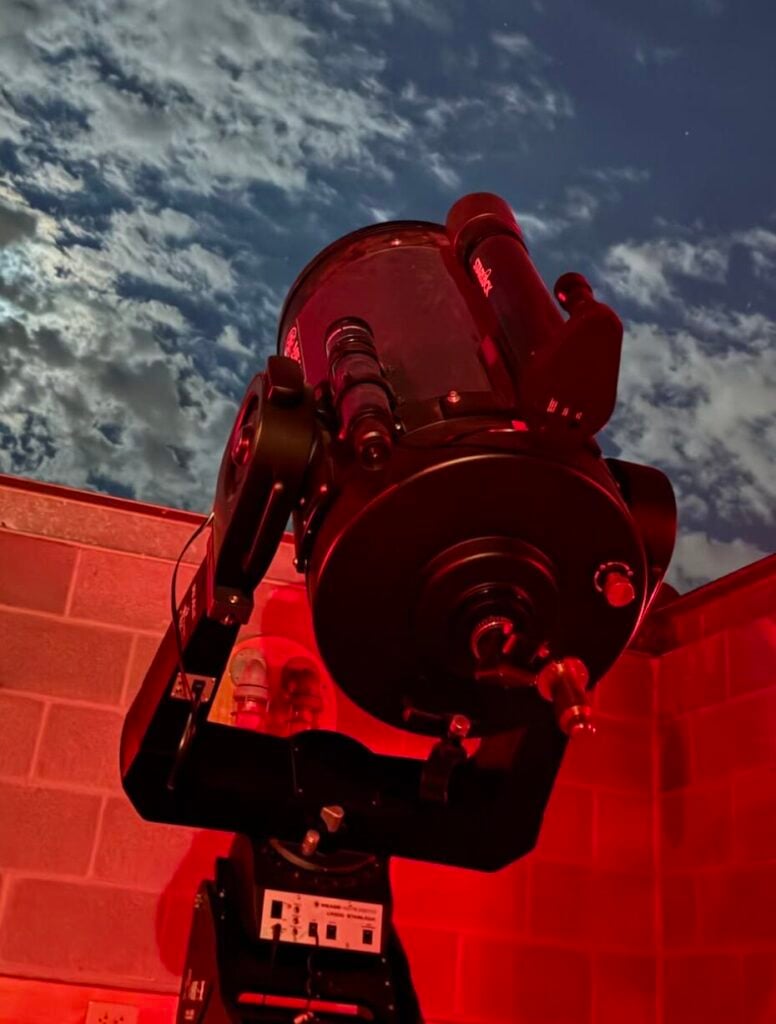
Students of the university can use the observatory as the general public does, but can also use the four telescopes for research purposes and special projects that are overseen by Physics and Mathematics Professor Austin Hinkel.
The Assistant Professor and Director of the University’s Observatory, Austin Hinkel, is someone who “wears a lot of hats.”
Hinkel received his Ph.D. in Physics from the University of Kentucky and has expertise in areas such as galactic archaeology and galactic dynamics. When Hinkel was a high school student, he went to one of Thomas More University’s public lectures where he decided to pursue astronomy after he saw Jupiter and its moons for the first time using their telescopes.
From being a professor who teaches about four classes a semester to running the public lectures now himself, he hopes that people can look at astronomy and wonder the “why?”
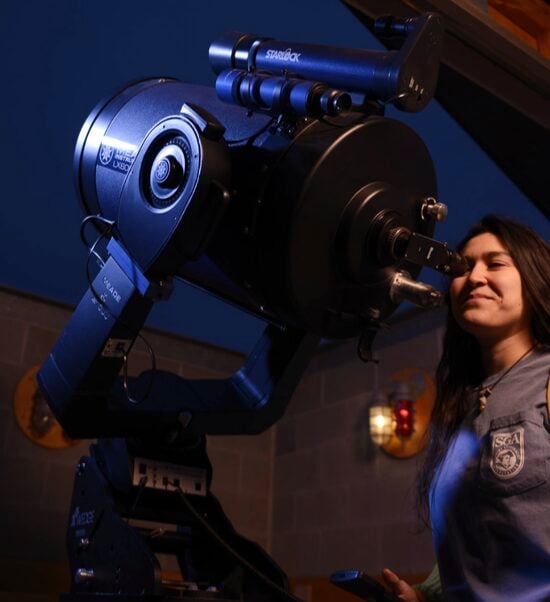
“I like how I can see people’s minds being blown,” said Hinkel.
As Hinkel assists with students’ research projects, he wants his students to take their mental images of what they think the universe looks like and compare it to the over 200 billion stars using the telescopes.
“It is a great way for students to see what the lecturers are talking about,” said Hinkel.
Students can also use the telescopes to study topics such as light pollution, the chemical makeup of stars, the age of stars, and much, much more.
“Thomas More University’s mission is to help students explore the meaning of life, their responsibility to others, and their place in the world,” said Hinkel. “For me, astronomy is an excellent perspective changer that really puts one’s place in the universe into perspective. When you begin to understand just how big the universe is, you start to appreciate how all of us down here are in the same boat.”
In addition, Hinkel runs the public lecture series that the observatory hosts for those to learn more about astronomy and related fields.
In the spring semester of 2026, the series included a lecture entitled “The Anthropocene: Understanding Modern-day Earth.” This lecture helped the audience to understand how humans have affected the Earth and its natural environment.
Come fall semester of 2026, the public can expect more of the 50-minute lectures like “Understanding Modern-day Earth” that cover a vast amount of astronomy topics.
The dates for the upcoming public lecture series will be coming soon. For more information about the Thomas More University Observatory and the upcoming event dates, please visit the website directly.
For more information about Austin Hinkel, please visit his personal website or email him directly at hinkela@thomasmore.edu.