










By Patricia A. Scheyer
NKyTribune reporter
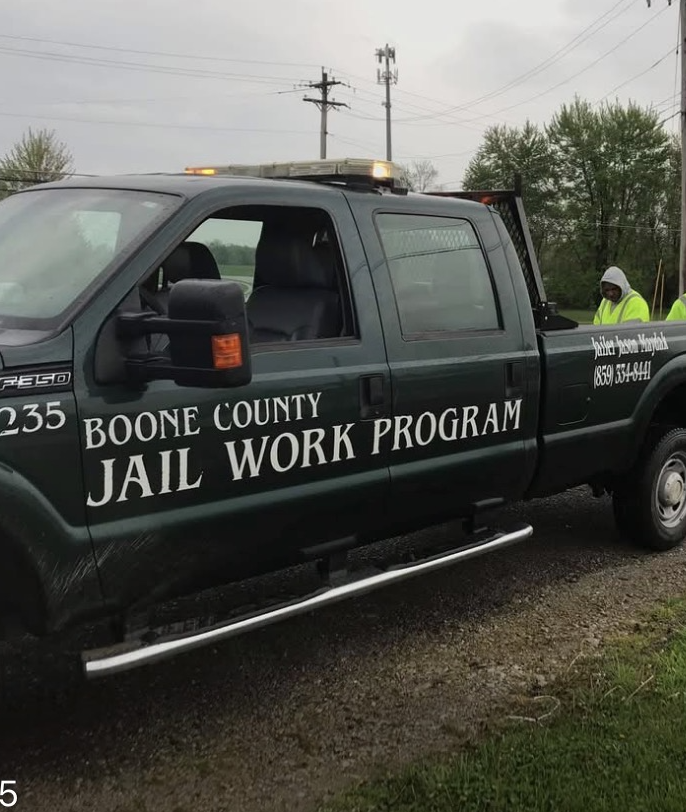
The Boone County Jail isn’t just a facility that takes prisoners and locks them up for the duration of their sentence. There is a Jail Work Program that inmates can qualify for, and these inmates work in their community 40 hours a week, just like regular people.
The regular jail holds 478 inmates, but another facility close by can house 76 inmates who qualify to live and work in minimum security conditions. Currently there are 34 inmates in the work program, which focuses on discipline, structure, and self-improvement.
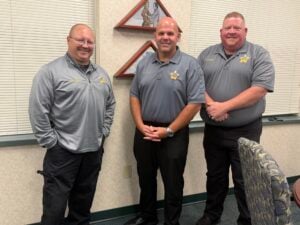
“Not all prisoners can qualify for the work program,” said Lieutenant Jim Wilson. “If you are sentenced to a year or more, you become a state inmate, and if your sentence is under a year you are a county inmate. If you are classified as a level one or two, you can be in the work program. There can’t be anyone with violence in their history, or if the crime they are convicted of is a violent crime they can’t be in the work program.”
The 34 inmates currently in the program work a 40-hour week, and their jobs vary. Last August they started taking on the project of cleaning up the cemeteries in the county.
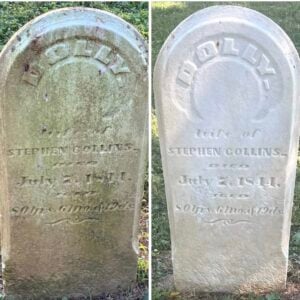
Wilson said there are 220 cemeteries in the county, some of them small family plots, but many in need of care. The work camp team has also been cleaning the old tombstones, and the result is gratifying.
Anyone who drives the county roads and sees a dead animal by the road might wonder who takes care of those carcasses, but the work camp inmates take care of that. If there is a tree down in the road from a storm, the inmates take care of that. Potholes in the street? They do that, too. They go out every day and work somewhere in the county. They pick up litter, which is a big job, and work with SD-1 for the recycling center, and with the county Public Works people to help monitor the parks, and build things for the parks, as well as filling potholes
.
“Seventy-five percent of the woodwork at Conservancy Park has been done by the inmates,” said Wilson. “The wood working at the frisbee golf course at Idlewild was done by inmates. We have a course we put them through, and we teach them how to do all the jobs, and how to work the machines they operate, too, like the mowing machines.”
The Work Camp Program was started in 2000 by then Jailer John Schickel, who was always looking at ways to improve things.
“To me it was a no brainer,” he said, with his usual grin. “There were all these young men, in the prime of their lives, many of them who have never worked a day in their lives and didn’t know how to work. So it was a two-fold goal, one to give these prisoners a work experience that they could experience work, the satisfaction of it, learn about work, and what it takes to work, and the other one to provide a service to the taxpayers of Boone County. It was a win/win situation.”
He said the other counties don’t have a program that is close to Boone County’s program. But he did say that running a work program is more work for the ones running it than it is for the ones in the program.
“It is kind of like raising teenagers,” he explained. “It is easier to spoil them and not let them do anything, because when you make them work, you get blowback. And you know, Jason Maydak is the Jailer now, but back when I was Jailer, Jason ran the work program for a long time. And Jim Wilson is doing a terrific job.”
Schickel is running for Boone County Commissioner now, and one thing he would like to see changed is the way inmates are chosen for the program, because there are so many other options now that the state has set up for the class 1 and 2 inmates, especially if they have problems with drugs or alcohol. If a recovery program is a mandate for an inmate’s release, they have to do that program and they aren’t eligible for the work program. He would like to be able to fill all the open spots in the program, because it really helps the inmates long term.
“The fact of the matter is that most of these prisoners never really had a work experience, and because they never had that experience, if they found a job, they wouldn’t keep it because they aren’t familiar with what it takes to keep a job,” said Schickel. “They don’t know how to act. They don’t realize what is expected of them. And I am talking about basic stuff like courtesy, appearance, and hygiene. So we focus on that in the work program.”
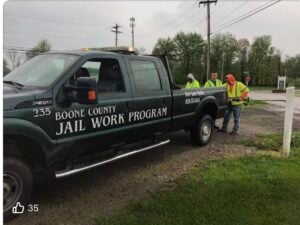
The inmates in the work program wear street clothes, but they are expected to dress appropriately, which means no muscle shirts and no long hair.
“I made them all have short hair,” Schickel said, and laughed. “I told them we are not Rock Stars, boys, we are just regular working folks. So we need to look respectable. They don’t really mind, if everyone is doing it. It raises morale. If they don’t want to do it, they probably don’t really want to be in the program.”
Jailer Jason Maydak said that many times the prisoners thrive in the disciplinary environment, and Wilson agreed. Captain Oscar Jeffries said sometimes they get inmates who turn down chances to get into other programs because they like being in the work camp program.
“We are setting an example because we are here every day, and we expect them to be here every day,” Wilson said. He has been in the program 24 years. “When they see you come to work, it is kind of contagious. I am proud of the program every day.”
If the inmates don’t work outside, they can do janitorial work inside the jail, or they can work in the kitchen. Feeding almost 500 people is no small task.
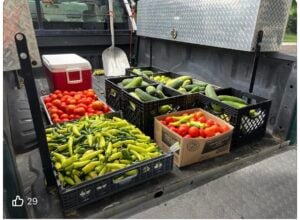
During the summer, the inmates run a garden, too, which helps with the fresh food that is prepared in the kitchen.
Schickel had a story about that too. He said one year they had so many cucumbers they were at a loss as to what to do with them all. So they came up with the idea of making pickles, and then they were dubbed ‘Schickel’s Pickles.’
“When I was running for Senate, I needed to do a fundraiser, and I needed a catchy name so Schickel’s Pickles fit the bill and stuck,” he said with a chuckle. “But it had its origin in the work camp garden, and now the money raised goes to charity. It is coming up this Saturday.”
The inmates do get paid $12.60 a month, which isn’t much, but they are receiving a lot of training, and learning how to follow up, and do a good job. That leads to pride in what they have done and what they achieved. In addition, they don’t feel so much like a burden on society, as they might if they were left to sit in a cell all day. With the exercise they receive by working, they can sleep better, and they can feel like they have helped the community.
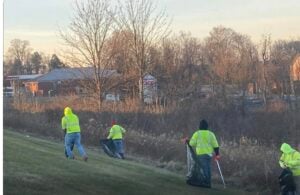
Captain Jeffries said that the program almost collapsed during COVID, because of all the regulations around the disease, but they were able to figure out how to save it.
It does save quite a bit of money for the county.
A couple of years ago, they tried to figure out how much money it saves the county, and they came up with a figure of $2.1 million. But Jeffries was quick to point out that the figure was based on people being paid $15 an hour, and no one that does the kind of work they do for $15 an hour, so the figure would calculate quite a bit higher now.
Lieutenant Wilson said he gets calls when some of the inmates get out of jail, because it is a lot like having a good teacher that they can touch base with. He said some call every week to let him know how they are doing.
Jailer Maydak said he has been involved with it since the beginning.
“When I became jailer, I wanted to make sure of two things,” he said. “The first is to keep the program going. The second is to make it better, if I can.”