















By Steve Flairty
NKyTribune columnist
Don’t misunderstand. There’s a whole lot of “Kentucky” in Frances Figart’s new book, Word from the Smokies: A Nature Reader. It’s maybe not in words about the state, but the Bluegrass is in her blood, for sure.
Will share more on that later. For now, let’s take a look at how a collection of natural-life stories from her weekly column came to be a new book.
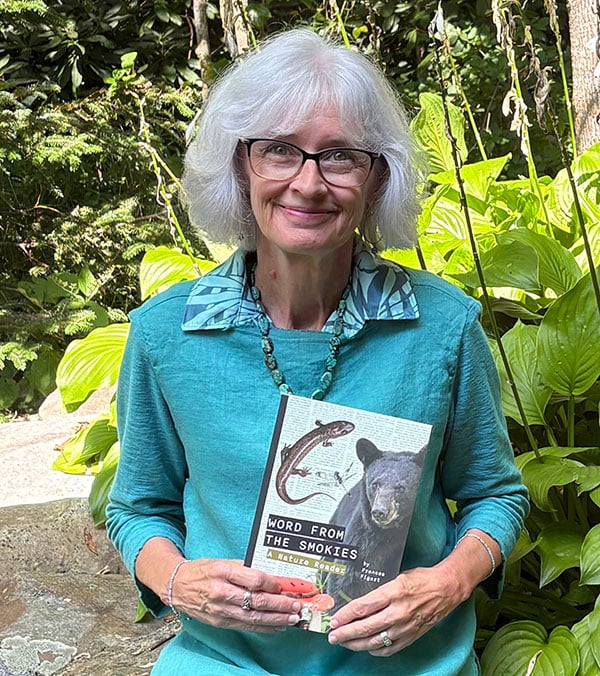
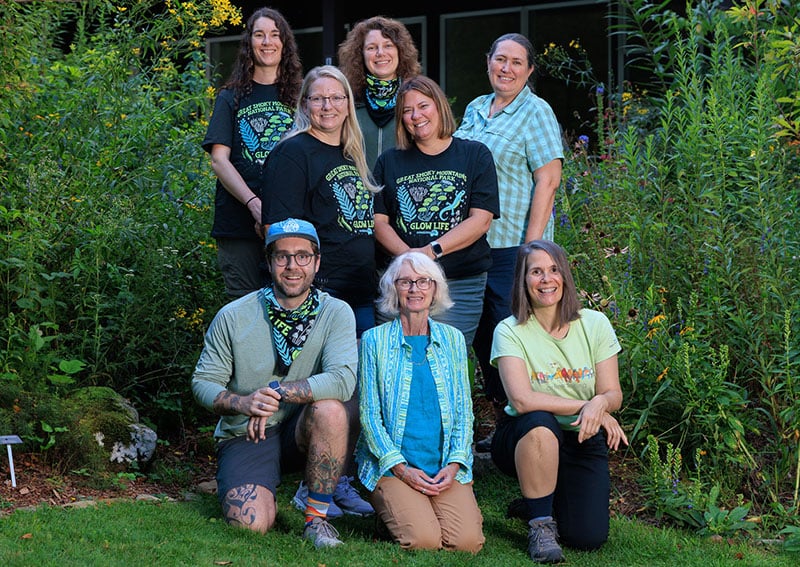
Frances is the creative director of Smokies Life, an association non-profit supporting the educational, historical, and scientific programs of the Great Smoky Mountains National Park. It’s a big responsibility, as she leads a creative team who “produce books, periodicals, videos, and podcasts and other projects that help park visitors understand the cultural and natural history of the Southern Appalachian region.”
A “mover and shaker” in the writing world in her region, she is most recently involved with the Tremont Writers Conference this year held October 21-25 near Townsend, Tennessee, a project she co-founded with noted Northern Kentucky writer Ron Ellis and others
Regarding her new book, a few years back during COVID-19 when visiting the park was curtailed for fear of disease transmission, Frances began writing a weekly column. The purpose was to help interested people continue to make connections to the park, even from the distance, hopefully, of their living rooms.
Called “Word from the Smokies,” the column first appeared in the Ashville Citizen-Times in 2020. In it, she has written both first and third-person articles about the natural world of the Smokies area, communicating both information and personal passion. It has helped answer a need for those kept apart from a place they loved.
Her 2026 collection of 24 of those writing pieces showcases her crafty writing ability, already demonstrated in a wide assortment of other published offerings, including three children’s books published by Smokies Life: A Search for Safe Passage (2021), Mabel Meets a Black Bear (2023), and Camilla and the Caterpillars (2024).

But now for the “Kentucky” part of this credible voice for the natural world, who lives in Flag Pond, Tennessee, near Ashville, North Carolina. I wanted to know her connection to my favorite state and how that has helped develop her personal inclinations and distinct writing voice.
She generously shared that connection in an email interview.
The practice of writing and leading others in communicating about conservation of the natural world “goes back to my own childhood, which was idyllic,” Frances explained. “I grew up in the tiny community of Trapp, in Eastern Kentucky’s Clark County, at a summer camp for which my parents acted as overseers. I spent summer days swimming, canoeing, hiking, and horseback riding, immersing myself in a landscape of Appalachian wildlife.” Her only sadness of the time, she noted, was “seeing animals hit and killed on roads.”
Frances had freedom as a child to roam the local slate-rock hills, becoming, she said, “part of nature, not separate from it.” Positive parental influence abounded. “I tagged along as Mom led campers on nature hikes and bird walks through the wooded hillsides. I watched her transform the tiny, timid Corinth Church choir into a forceful ensemble that could deliver a cantata to rival those she’d been a part of during music weeks at Ridgecrest Conference Center in North Carolina.” Her father’s strong writing voice demonstrated in a Baptist newsletter also hugely influenced Frances for what she became.
Later as an adult, she would work for advertising and graphic design firms in Lexington, as well as writing for the Lexington Herald-Leader. She was happy in those jobs, but also happy to reside in another locale. She lived in a cabin “an hour’s commute away from the city amid oaks, hickories, pines, and hemlocks in the Daniel Boone National Forest,” she said. “Living in the community of Furnace near Ravenna in Estill County, the Red River Gorge was my playground where I could hike and kayak on weekends, and I kept up a meditation practice at the nearby Furnace Mountain Zen Center.
“I walked daily on nearby 2057, a Forest Service road, to some sacred red rocks and a blue-green lake, communing with beavers, box turtles, bard owls, and pileated woodpeckers. That’s where I was when the planes hit the towers. A few years later, most of Mountain Springs Road was unsustainably logged, wreaking havoc on springs, caves, and their Indiana bat inhabitants. I tried everything I could think of to stop the logging, all in vain.”
Frances would move on to become a tourism professional and live outside the United State in both Canada and Costa Rica. She took note of “how our roads, human development, and extractive practices are devastating species everywhere. I wanted to live someplace like Costa Rica, which has protected 25 percent of its land mass in parks, reserves, and sustainable resort destinations.”
Though she left Kentucky for good in 2013 “after helping my mother die in Winchester,” it was her Kentucky roots that formed her, and that helped lead her to her current station in life. A good friend from Berea College, Tammy Horn (Potter), Kentucky’s State Apiarist, was helping restore fracking sites by introducing bee colonies to what Frances called “the wounded landscapes,” and she took strong note of Horn’s work. It further whet her appetite for the natural world and enriched her love of Appalachia.
“I found myself drawn to the Great Smoky Mountains, which protects 522,427 acres equally shared by Western North Carolina and East Tennessee,” she said. “Here the elevations are much higher than in Kentucky, ranging up to 6643 feet at Kuwohi.” There she found great natural life diversity and realized that “I got my energy from the mountains of Southern Appalachia, and this was the center of that life force.”
Frances is entrenched now in the Smokies, living in and writing about the diverse landscape she loves, harboring a deep sense of place, with, she said, “a pantheistic belief that I am nature, nature is me, and that without respect and protection for all species, we as humans are doomed.”
Back in Kentucky, we still claim her as our own.
For more about Frances Figart and her work, check out www.francesfigart.com or smokieslife.org.
Steve Flairty is a teacher, public speaker and an author of seven books: a biography of Kentucky Afield host Tim Farmer and six in the Kentucky’s Everyday Heroes series, including a kids’ version. Steve’s “Kentucky’s Everyday Heroes #5,” was released in 2019. Steve is a senior correspondent for Kentucky Monthly, a weekly NKyTribune columnist, and a former member of the Kentucky Humanities Council Speakers Bureau. Contact him at sflairty2001@yahoo.com or visit his Facebook page, “Kentucky in Common: Word Sketches in Tribute.”