








By Steve Flairty
NKyTribune columnist
It was on a routine morning on September 11, 2001, and the principal’s assistant quietly walked into my fourth-grade classroom, motioned to me, and whispered in my ear. You sort of know the rest . . . and I know you have YOUR story, too.
I think there’s no question that Americans, as a society, are divided today — possibly even dangerously so. The reasons are a discussion for another day. But at the time of 9-11, at least as I can recall and what many others have said, we seemed to have a discernible sense of unity in the aftermath of the tragedy. That was a good thing.
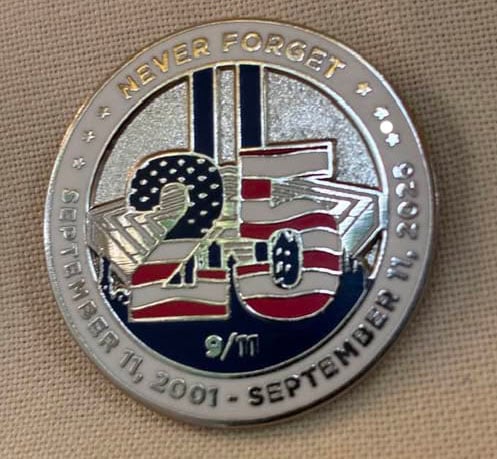
A Lexington friend of mine, Dave Robertson, reminded me of that recently while sharing this story. Dave usually traveled on Mondays and Fridays as a self-proclaimed “road warrior” for IBM management, but on this particular week, a conflict caused him to fly on Tuesday. It was on the eleventh day of September 2001. He would be flying to Raleigh, NC, and his initial Comair flight from Lexington to Cincinnati was uneventful. He noted that it was “obviously a great day for flying.”
It got even better when the pilot received permission to leave 30 minutes early enroute to Raleigh because there were not many taking the flight. “It was a critical 30 minutes because things changed suddenly over Virginia,” Dave said. “We made an extremely hard turn to the right and began to descend, both done rapidly.”
No message came from the plane’s captain in the air or on the way to the gate, but the passengers and crew would encounter a “traffic jam” of airplanes on the way to the gate at Raleigh, where soon they found a madhouse of a terminal.
“It was there that we learned what happened, and there I began to see the best side of our country,” he said.
Here’s a sampling of what Dave saw:
• People offering to share rental car rides with others leaving the airport driving great distances to go home.
• Dave’s own company, IBM, put out a directive that “no manager should go home until they had personally confirmed the safety of each of their employees.” It was difficult during those circumstances for Dave to reach those employees, “but thanks to a lot of ‘help’ from my friends, colleagues, and my fellow managers, including my wife, Jean, I was able to make contact that afternoon,” he said.
• Flying stopped for the time being, so Dave decided to drive home to Lexington. There was plenty of evidence along the roads home showing simple caring and strong patriotism. “American flags were hanging from overpasses, businesses and homes, and many exits had ‘safe havens’ the locals who had created in the parking lots of churches and businesses. You could rest, get refreshments, or just stop and talk to someone for a while.”
My wife, Suzanne, mentioned that “People were kinder to each other and acted more humbly. The atmosphere was of more calm, and the daily aggravating things of daily life didn’t seem to matter as much,” she said. Some bonds established then have been long-lasting, she noted. “A sign language interpreter colleague of mine and I were together in a classroom at Lexington Community College. The interruption occurred and we watched the second bombing. We communicate about it every year on September 11.”
I saw similar positives also, and it seems that left and right political polarity, at least for a while, was mostly set aside. President George Bush had won a very close election, but his approval ratings jumped pretty high for his leadership in the immediate aftermath of 9-11. Sporting events around the country generally saw collaborative moments of silence and patriotic music with loud cheering. In my experience, whether one was Democrat, Republican, or Independent, we were united after experiencing such a gut punch to our country. We all became friends–for a while.
And we probably learned some important prevention and response mechanisms from 9-11, seeing as how we haven’t been attacked similarly since. It seems, though, that today we’ve forgotten the importance of being ONE people, American people who look to build up each other rather than tear each other down.
We need to do so because it’s the right thing to do, and we can’t wait for another national catastrophe. In fact, the Covid-19 pandemic may have divided us more. We need to affirm our loved ones regularly, and most importantly, put differences to the side and look for what we have in common . . . then build on it. That doesn’t take groveling, but it does take a healthy portion of humility.
Anyone else care to keep this positive focus on a daily basis? Coming together might be our only hope . . . and we showed we could do it some 25 years ago.
Steve Flairty is a teacher, public speaker and an author of seven books: a biography of Kentucky Afield host Tim Farmer and six in the Kentucky’s Everyday Heroes series, including a kids’ version. Steve’s “Kentucky’s Everyday Heroes #5,” was released in 2019. Steve is a senior correspondent for Kentucky Monthly, a weekly NKyTribune columnist, and a former member of the Kentucky Humanities Council Speakers Bureau. Contact him at sflairty2001@yahoo.com or visit his Facebook page, “Kentucky in Common: Word Sketches in Tribute.”