









Why would I write a column about someone who was never elected in three tries, two decades ago? Why should you read such a column?
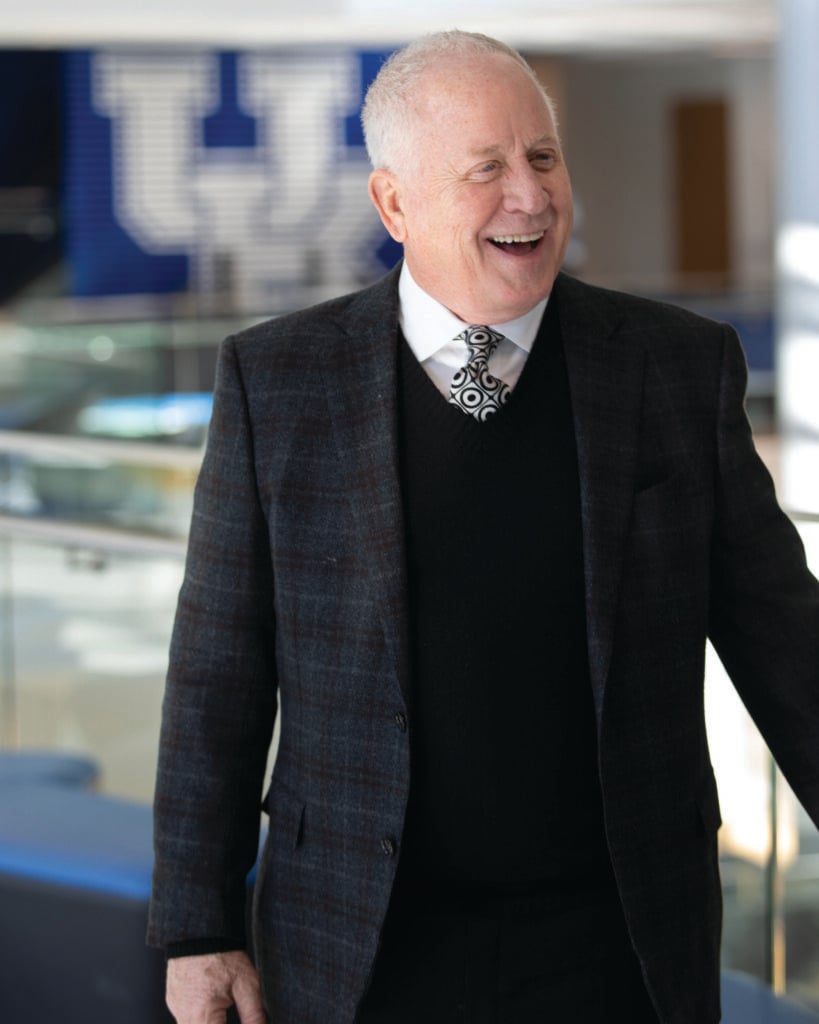
Because it’s about Bruce Lunsford, who died at 78 on Sept. 5. He made a difference in non-elective office, helping bring the UPS hub to Louisville. He built a huge health-care company from scratch, and wrote a good bit of the political history of Kentucky in this century’s first decade.

Brilliant, dynamic and articulate, Lunsford wanted to follow in the footsteps of his hero, Democratic Gov. John Y. Brown Jr., but the scars on his business record made him an easy target. After losing two bids for governor, he again used his wealth to even the odds against well-funded Republican Sen. Mitch McConnell, but fell short in an honorable campaign.
Lunsford grew up on a Kenton County farm, went to the University of Kentucky and became an accountant and lawyer, then deputy to Development Secretary Larry Townsend, Brown’s closest adviser. Lunsford helped pass Brown’s economic-development legislation, and when the publicity-shy Townsend resigned and Finance Secretary George Atkins declined the job, Brown made Lunsford secretary of a new Commerce Cabinet.
After Brown’s term ended, Lunsford started Vencor, which became the nation’s largest long-term healthcare provider but went into bankruptcy protection after the federal government cut payments to nursing homes. The company survives as Kindred Healthcare. Its fall hurt many Lunsford investors, and when he ran for governor in 2003, he seemed to be doing it partly for vindication.
He might have been Democrats’ best nominee that year, because front-running Attorney General Ben Chandler was at odds with scandal-scarred Gov. Paul Patton and Democrats had held the governorship for 24 years, longer than any other state. Lunsford was a first-time, self-financing candidate who said he wasn’t obligated to anyone, much like Brown in 1979 when the Julian Carroll administration was mired in scandal and Republican Louie Nunn, a former governor, looked like a real threat.
When Lunsford filed, he said, “I’m still reserving the right not to run,” knowing his Vencor record would be attacked. He hoped having Dr. Grady Stumbo – human-resources secretary for Brown, a candidate for governor in 1983 and 1987, and state Democratic chairman under Brereton Jones – would burnish his health-care credentials and provide part of a political base. I wrote at the time that Lunsford would “play the role of the non-obligated outsider with more focus and intensity than Brown, but his balloon probably has too much ballast.”
It did. Lunsford’s wealth financed a massive advertising campaign that inflated relatively minor blemishes on Chandler’s record, and Chandler responded with increasingly harsh ads about Vencor. The day Chandler started an ad in which a woman said “Bruce Lunsford did not care that my mother was abused” at one of his nursing homes, Lunsford got a fresh poll and decided to pull out of the race with four days left. He objected to the ads and suggested they had so soured public opinion of him that he had no chance of winning; perhaps he didn’t want to risk placing third after spending a record $8 million.
He endorsed Jody Richards, the state House speaker, who almost caught Chandler, losing by 3.7 percentage points. That made Chandler look weak, and soon a poll showed him running behind Republican U.S. Rep. Ernie Fletcher – the first time a Republican had led in a public poll in a Kentucky governor’s race. Lunsford’s ire at Chandler was stronger than his party loyalty, and he endorsed Fletcher, who won. All that killed any chance Lunsford had when he ran in 2007. He hoped to get labor support by making Attorney General Greg Stumbo his lieutenant-governor candidate, but “The people who had been my friends in those unions all those years wouldn’t even let us in the door,” Stumbo recalled.
Lunsford beat future Louisville mayor Greg Fischer to become the 2008 nominee against McConnell. His heavy spending forced McConnell’s campaign to borrow money for the first time, and amid the national financial collapse, McConnell’s final polls showed them running even. But Barack Obama’s reverse coattails apparently helped McConnell win by 6 points.
National Democrats had wanted Lunsford to attack McConnell for the financial bailout, which was unpopular, but Lunsford refused, knowing it was needed. “Bruce was principled,” Stumbo said. “You don’t see a lot of people in politics who act like that. . .
“When you got to know Bruce, you couldn’t help but like Bruce. He was really one of those people who you were glad came into your life.”
Danny Briscoe, insurance commissioner under Gov. John Y. Brown Jr. and campaign manager for Gov. Wallace Wilkinson, had this to say about Lunsford: “For a guy who made as much money as he had, and had such a reputation, he stayed normal. When you met him and talked to him you didn’t know he had been successful. . . . He was really good at a lot of things; politics wasn’t one of his top deals. . . . He knew he was really smart but he did listen to other people for advice and that’s what smart people do.”
●
Two days after Lunsford died, we lost retired Franklin Circuit Judge Roger Crittenden, one of the good guys. He was 81. At his funeral Monday, his friend of 60 years, former U.S. Attorney Mike Troop, got it right: Crittenden had “a jurisdiction which lives and breathes politics” but “politics and personal views never entered his decisions.” That included the 2004 case that requires the legislature to pass a budget.