








By Paul A. Tenkotte, PhD
Special to NKyTribune
(Note: The is the first part of a continuing series celebrating the incorporation of the City of Park Hills, Kentucky, in 1927.)
It was October 1924, and the nation was booming. The Roaring ‘20s seemed so full of optimism and hope. The region’s principal newspaper, "The Kentucky Post," shared in that optimism and wished to educate its readers about the benefits of homeownership.
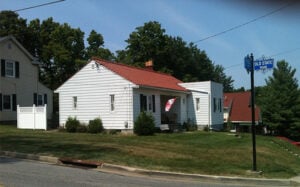
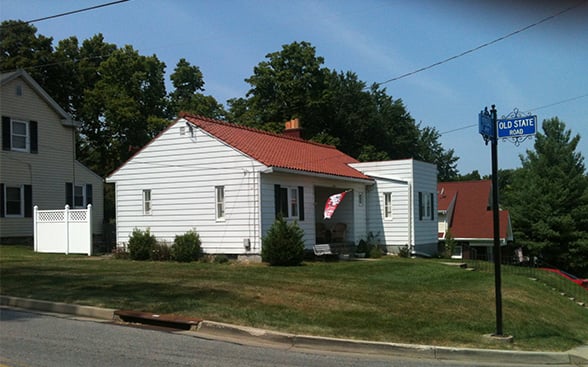
Amsterdam Road, Park Hills (Photo by Paul A. Tenkotte, 2015)
The brand new subdivision of Park Hills lay just west of the Covington city limits, along the Ft. Mitchell streetcar line. Developed by D. Collins Lee and Robert C. Simmons, the 1920s subdivision of Park Hills featured city water, sewage and gas lines, electricity, proximity to Devou Park, and convenient accessibility to the city. Beautifully planned, its spacious building lots, tree-lined paved streets, and concrete public walkways and steps placed everyone within a short walking distance of an architecturally-pleasing stone streetcar stop.
Working with the subdivision developers, financiers, and John H. Beckman, a Covington contractor, "The Kentucky Post" devised a plan to build at least 50 affordable “Happy Homes” in
Park Hills. Small in size by today’s standards, but spacious by those of the 1920s, the first model
home featured five rooms and a bathroom. Its style was described as a Spanish bungalow with a
red tile roof, popular in California, but built for the Kentucky climate.
The terms were very affordable for the average middle-class family: $1,000 down and about $6,000 additional paid in weekly “rent” payments averaging $10.08 per week. The $7,000 price included a lot valued at $1,500. Anyone interested in buying a lot and building a house was advised to apply to the Kentucky Post Happy Home Editor.
Why continue enriching a landlord when you have the means to invest in a home of your own? That was the rationale the "Kentucky Post" observed on October 6, 1924, “Considering home building from an investment point of view, it is easy to see that if a landlord makes money on the rent he charges you for the privilege of living in his house, you certainly should be able to make money on a home of your own provided you build economically and finance wisely.” The logic is straightforward: if your rent is generating profit for someone else, that same money could be building equity for you.
The key to making the houses affordable, the "Post" claimed, was volume, and working with
partners interested in making the American dream of homeownership achievable. The contractor used local materials, including concrete blocks for the foundations, manufactured by the Marion F. Stout Co. of 34th and Decoursey in Covington. The furnace choice was the “Dixie Furnace,” made by the Gottschalk Furnace Co. of 242 Pike Street in Covington. Other partners included Cassidy’s Hardware (25 Pike St.), John T. Underhill Plumbing Co. (412 Scott St.), the Bishopric Stucco Co., and the T.W. Spinks Building Supply Co. (1512-1540 Russell St.).
“Movie crews” were on hand on Sunday, October 12, 1924, to film potential homebuyers and visitors. The Liberty Theater of Covington showed newsreels of the progress of construction of the model home, which opened that fall. And the Kentucky Post followed the construction progress in its daily pages.
Today, as you drive through Park Hills, you’ll spot Happy Homes here and there, as well as fabulous English Tudors, and of course, a couple of the subdivision’s original stone streetcar stops. Built in an era when homes possessed individuality, the city of Park Hills remains a desirable address for those seeking historic residential alternatives.
Paul A. Tenkotte, PhD is Editor of the “Our Rich History” weekly series and Professor of History at
Northern Kentucky University. To browse more than ten years of past columns, click here. Tenkotte also serves as Director of the ORVILLE Project (Ohio River Valley Innovation Library and Learning Engagement). For more information see https://orvillelearning.org/. He can be contacted at tenkottep@nku.edu.