













By Steve Flairty
NKyTribune columnist
A fascinating story from the early 1800s involving a slave doing high-level mapping and tour guiding in the Mammoth Caves popped up recently while perusing one of my most treasured history resources, The Kentucky Encyclopedia. It involved the account of Stephen Bishop, a slave who became both an explorer and guide in the internationally celebrated cave system around the year 1838. I was hooked on the story and sought other sources.
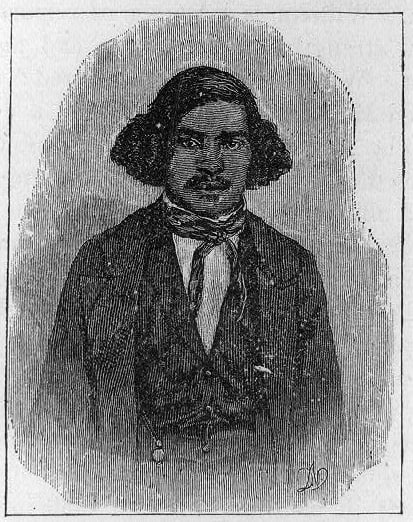
An act Bishop performed in that underground expanse was nothing less than heroic. While leading a group of cave visitors into the system, he came across a deep chasm, later to be called the Bottomless Pit. There was no way to continue the exploration, so the group was forced to turn back. But with the help of another person, Bishop used a long pole (or possibly a ladder) to climb across. His documented findings on the other side of the chasm brought tremendous change to the exploration scope and interest of the Mammoth Caves system.
Bishop was born into slavery in 1921 and was purchased by Glasgow’s Franklin Gorin. Gorin acquired the Mammoth Cave property and brought the 17-year-old along to work there as a guide. He was a natural at the job; you might call Bishop a cave guide extraordinaire. He was witty and charming, and a great example for many other black guides there during the period, with the Bransford family being prominent. According to records kept at the time, Bishop was the one most written about and is considered to have explored more of the cave system than anyone.
According to an article on the National Park Service (NPS) web site, Gorin noted that Bishop was “a self-educated man. He had a fine genius, a great fund of wit and humor, some little knowledge of Latin and Greek, and much knowledge of geology, but his great talent was his knowledge of men.”
He was a great listener, and he gained much from learned individuals, such as researchers and professors, of whom he often led on tours. One visitor described Bishop this way. “His vocation has brought him into contact with many intellectual and scientific men and as he has great quickness of perception and a prodigious memory, he has profited much by intercourse with superior minds. He can recollect everybody that ever visited the cave, and all the terms of geology and mineralogy are at his tongue’s end.”
Dr. John Croghan, a physician from Louisville, bought the cave system from Gorin in 1839. Obtaining Bishop was part of the deal, and the slave would become a big part of his plan to make Mammoth Caves into a bigger tourist attraction, and also a tuberculosis treatment center. Croghan thought that bringing sick tuberculosis patients into cool airs of the caverns would bring healing. That initiative, however, was a disaster. Of the eleven patients, five died while underground and the other six died shortly after being brought to the surface.
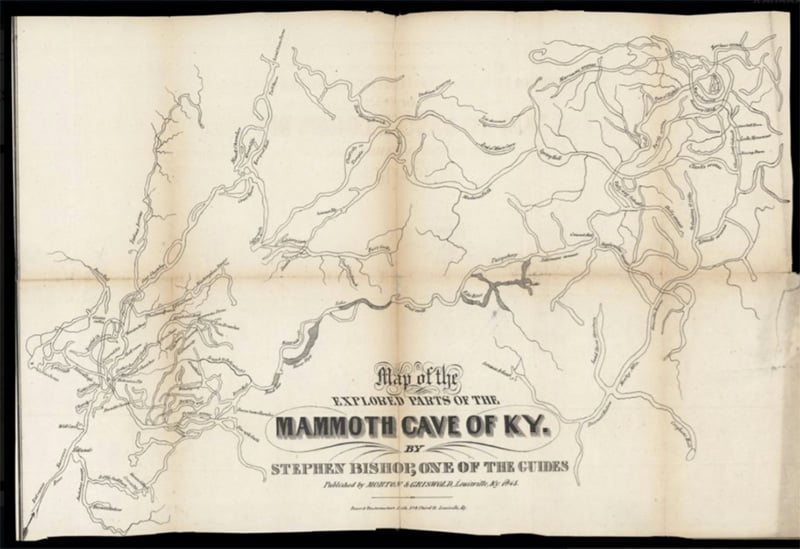
The amazing overall success of Bishop as a guide and explorer is clear, however. Crossing the Bottomless Pit opened many new discoveries and further exploration. Bishop is credited with discovering Mammoth Dome and the Ruins of Karnak. He had an incredible visual memory, and it’s reported that Bishop, while at the Croghan Estate at Locust Grove, in Louisville, drew a map of his explored passageways. A cave visitor published it in a book called Rambles in the Mammoth Cave During the Year 1944.
Bishop had a family, married to his wife Charlotte and having one son, Thomas, born in 1843. Interestingly, Thomas gained his freedom and became a paid guide at the Mammoth Caves. In 1857, Stephen Bishop died from unknown causes and was buried in the Guide’s Cemetery in an unmarked grave at Mammoth Caves. Later, a visitor and admirer from Pittsburgh provided the iconic Bishop a gravestone at the cemetery, and it can be seen today.
For a quite romanticized but engaging documentary on his life, allow me to recommend the YouTube presentation, “Stephen Bishop: The Slave Who Conquered Mammoth Cave’s Darkness.”
Steve Flairty is a teacher, public speaker and an author of seven books: a biography of Kentucky Afield host Tim Farmer and six in the Kentucky’s Everyday Heroes series, including a kids’ version. Steve’s “Kentucky’s Everyday Heroes #5,” was released in 2019. Steve is a senior correspondent for Kentucky Monthly, a weekly NKyTribune columnist, and a former member of the Kentucky Humanities Council Speakers Bureau. Contact him at sflairty2001@yahoo.com or visit his Facebook page, “Kentucky in Common: Word Sketches in Tribute.”