
















By Abigail Wright
NKyTribune staff writer
Turning a scientific discovery into a treatment patients can use takes years of research, testing and collaboration. CTI Clinical Trial & Consulting calls this process “moving medicine forward,” a mission focused on helping promising treatments move from the laboratory to patients.
For CTI, a global clinical research organization headquartered in Covington, that process is at the center of its work.

CTI works with pharmaceutical and biotechnology companies to design and manage clinical trials, conduct laboratory testing, analyze research data and navigate regulatory requirements, according to Jamie Glavic, the company’s senior manager of corporate communications and community engagement.
According to Glavic, the company operates in more than 70 countries and has contributed more than 200 drug and medical device approvals. Its research focuses on areas including rare diseases, cell and gene therapy, transplantation, oncology ad neurology.
“Clinical trials are where scientific discoveries are carefully evaluated in people to determine whether potential new treatments are safe and effective,” Glavic said in a statement to the Tribune.
From laboratory research to human trials
Clinical trials are research studies involving human participants who help researchers evaluate whether potential treatments are safe and effective, according to the National Institutes of Health (NIH) website.
The trials typically progress through several phases, each designed to answer different questions. Early trials examine a treatment’s safety, side effects and appropriate dosage, while later trials involve larger groups of participants to evaluate effectiveness and compare the treatment with existing options, according to the NIH.
However, not every treatment advances through the process. Researchers may discontinue testing if a treatment is unsafe or does not demonstrate effectiveness, the NIH said.
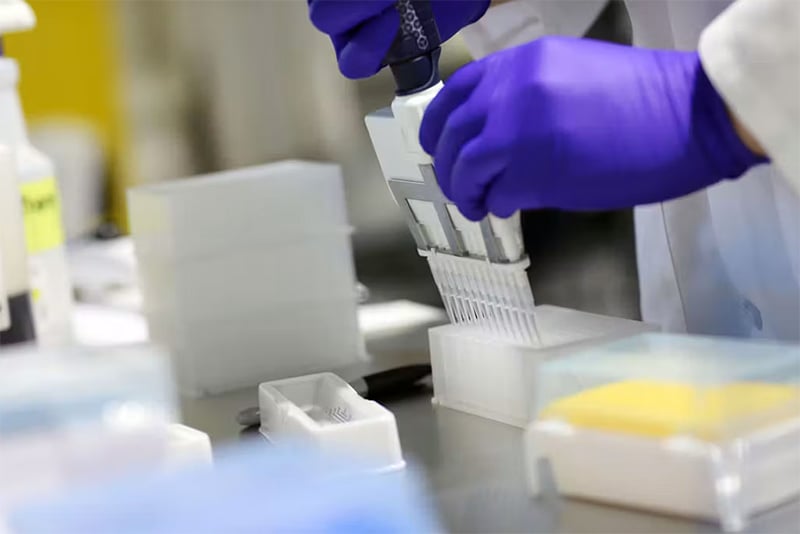
CTI helps coordinate different parts of that process, including study design, patient recruitment, research operations, laboratory testing and data analysis, Glavic said.
The process can take years or even decades, with studies sometimes encountering delays or requiring additional research, she said.
At CTI, many of these services operate within the same organization, allowing clinical, laboratory and research teams to collaborate throughout the drug development process, according to the company’s website.
Much of CTI’s work focuses on complex areas of medicine where patients may have limited treatment options, Glavic said.
“Each new trial helps researchers better understand a disease, the people affected by it, and how care might be improved,” Glavic said.
The people behind clinical research
Clinical research depends on people willing to volunteer for studies. Participants allow researchers to evaluate how potential treatments affect the human body and whether or not they could benefit future patients.
CTI operates its own clinical research centers, including one in Greater Cincinnati. The local center has completed more than 950 clinical trials that contributed to more than 80 approved drugs, according to Glavic.

Depending on the study, participants may attend regular appointments, undergo medical examinations, provide laboratory samples or follow specific instructions throughout the trial, according to the NIH.
Before participating, volunteers must go through an informed consent process in which researchers explain the study’s purpose, procedures and potential risks, according to the Food and Drug Administration website.
Glavic said CTI’s research teams work to ensure participants feel informed and supported throughout the process.
“Ultimately, every advancement in medicine depends on people who are willing to participate in research, and that is something we never lose sight of,” Glavic said.
Expanding research opportunities
CTI recently expanded its clinical research operations into Michigan through the acquisition of SRI’s Clinical Trial Unit, now operating as CTI Clinical Research Center Michigan.
The expansion was highlighted in the company’s third-quarter newsletter, “On the Move.” Located in Plymouth, Michigan, the center has more than 13 years of clinical research experience and a 13-bed research unit, according to the newsletter.
The newsletter also said that the center supports Phase I-IV and first-in-human studies, with expertise in vaccines, neurology and pain research.
The addition gives CTI access to more potential research participants and physician networks throughout the Midwest, Glavic said.
“Ultimately, the expansion is about creating more opportunities for people to participate in clinical research while strengthening our ability to help bring new treatments forward,” Glavic said.