














A few months ago I was sitting on my porch, and listening to a podcast.(Modern Wisdom; a wonderful resource). The gentleman speaking brought up an idea that gripped my attention. He said, “Something can be literally true, while not being very practical. I call it literally true but figuratively false.”
What exactly does this mean? Well, one of the ways in which I see this being true is in the health and fitness space. The reason we are all the way we are is incredibly complicated and not all our fault. (Perhaps even most are not) However, this does us no good if we are trying to change something about it. It might be true, but not very useful.
From the moment you are born you are learning. Learning from others, from the places you visit, from what is said, as well as what is not said, you learn expectations from the people around you, you develop a sense of normalcy from the people and places you are around the most, and all of these factors intermingle and, in part, produce you. You then act in a way that is reflective of what you have learned. (Some might even say conditioned.)

In other words, a lot of your behavior is not necessarily your fault. It may have been the “normal” that was taught to you, but in order to change, you have to act like it was your fault. In order to change, you have to assume responsibility over the behavioral/thought patterns that wreak a sense of havoc over your life; if you don’t, there is no way you would ever change.
Learning how to rest
While I was growing up, I played soccer, football and basketball. I lifted weights for fun; I was incredibly active. More than this, I was praised for being active. It was the main medium through which I received affection. It was the arena of life where I felt most valuable. I didn’t say this to myself in my thoughts, but learned it from the environment and people I grew up around.
Issues began to ensue in college; I had quit playing all competitive sports. I had a weakened sense of value, and felt an anxious compulsion to constantly produce in order to be valued. I started working out four hours a day, committed to extracurricular social outings, and did 18 credit hours of school. I began to really struggle to sleep, and woke up everyday feeling beat up and exhausted. What was worse was that every time I sat down to rest I would have a bombardment of suspicious thoughts say, “you know, you could be learning right now, or
working out, or seeing people, or working, or whatever.”
My mind had become a place that was unable to rest; it felt valueless when it was.
I struggled with resting properly, and still do. It is not my fault that I struggle with it, but it is all my responsibility to change it.
Seeing yourself in this way can be incredibly empowering, it is a way of seeing yourself in a higher resolution. You are inextricably influenced by others, but simultaneously have the ability to wrestle and mend what has been broken inside of you. Over the past four years, I have had to take intentional time to do nothing, so that I might teach myself that I am valuable even if I am not producing. The fruits of this work have been: more presence with my family, a greater sense of peace about myself, lower anxiety, better sleep,
improved relationship with friends.
Blaming others for our struggles is not completely untrue, but it is completely unhelpful if we wish to change it. Seeing yourself clearly means identifying how you were influenced and molded by others, but cannot stop there.
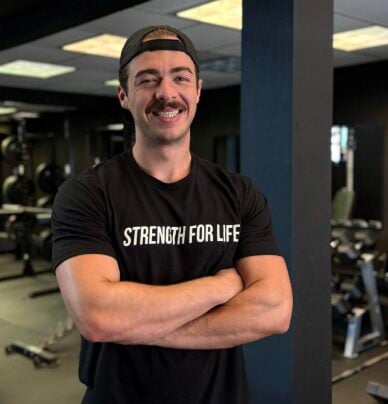
Lee Ramsey has a passion for fitness as a way to help people grow and change into more adaptable, capable and resilient versions of themselves. He is owner of Sanctify Fitness in Covington and a regular fitness columnist for the NKyTribune.