




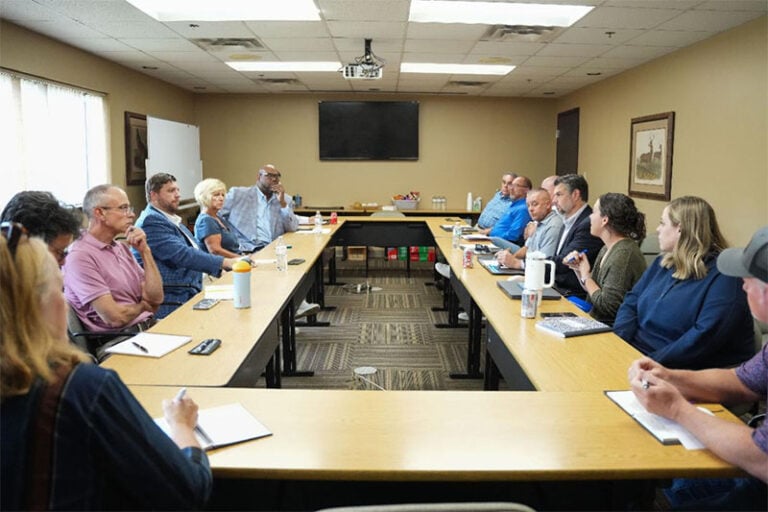







(Mackey McNeill presented these remarks at a SDI board meeting on Tuesday where people spoke for about an hour on behalf of Gayle Pille’s protest of SD1’s plan to put a sewer pipeline criss-crossing Woolper Creek on her 40-acre farm in Boone County. Pille is also a committed environmentalist who says SD1’s plan will destroy the natural habitats and preserve she has built and sustained for many years. McNeill said there were also nearly 30 protesters outside the meeting. See the NKyTribune’s story about Gayle. Pille’s statements to Boone Fiscal Court.)
I’m here to share my experience living on land with a substantial SD1 sewer easement.
One that crisscrosses Banklick Creek.
After learning about climate change in 2005, my husband and I made new choices, buying property in 2006 to restore the ecosystem and build a homestead on permaculture principles. Early on, bushwhacking through honeysuckle and multiflora rose we found an SD1 sewer pipe lying exposed. That discovery led to months of negotiation, and eventually a lawsuit, over how SD1 would stabilize it — yards of concrete, versus a more natural solution. We wanted natural, but were told by the SD1 contractor a natural solution meant destroying the mature forest south of the creek. We love that forest and want to preserve it. So we settled for a stone-clad concrete weir.

In 2016, home from vacation, I walked down to where the turtles lay their eggs at the creek. Panic rose in me as I witnessed a creek filled with pink sludge and dead fish. The stench confirmed my worst fears.
A contractor used a six-inch bypass pump, entirely too small, when repairing a section of pipe. Raw sewage poured into Banklick Creek. Instead of properly removing the broek pipe, the contractor buried it in the creek. Ever since, the creek has gifted us trashcans full of old sewer pipe. Yesterday, I found one. I brought it for show and tell. I requested assurance from Mr. Chaney that this contractor would never work for SD1 again. He told me they’d be retained.
Fast forward to 2025. On an evening stroll to the creek, I discovered it had rerouted itself to the south side of the concrete weir. Now eroding the very forest the engineer told me the weir would protect. When I raised this, SD1’s Director of Water Resources considered it, then told me, “I know this isn’t ideal, but our pipe is stable, so we will take no action. Sorry about your forest.”
Sorry about your forest.
In my chest, I felt the sound of something breaking. SD1’s stated values include Environmental Leadership: protecting public waterways for today and tomorrow. I share that value.
My values reflect in my choices.
At home:
• No pesticides or herbicides
• Big spring, summer and fall gardens. Laying hens. Red meat from the forest.
• Scouring the creek to collect massive amounts of trash
• Geothermal heating and cooling, a roof covered in solar.
And at my work:
• My office remodel was named by AIA Cincinnati as the sustainable development of the year. They said, “If a small company can do this, anyone can.”
My values aren’t window dressing. They are the first screen of every choice I make.
On paper, my values and SD1’s values are remarkably aligned. But values only have meaning when they guide a hard decision. The kind you are being asked to make today.
I tell my grandchildren it’s the job of today’s adults of today to leave them a healthy planet. That’s not an unreasonable standard for a public agency — whose values so closely match my own.
It is pure joy to watch my grandchildren leap from my car and run to the creek, fascinated by crawdads, fish, and fossils, thrilled to spot a beaver take a swim. No tech, no ballfield, can replace that wonder. I wish this for every child.
The children and grandchildren of today will live with the consequences — positive or negative — of your choices.
So the question today isn’t what SD1 needs to build. It’s what you’re willing to destroy to build it.
What will you choose? Will you choose to look in the eyes of your grandchildren, and say, I’m sorry about your forest?
This is your legacy too.
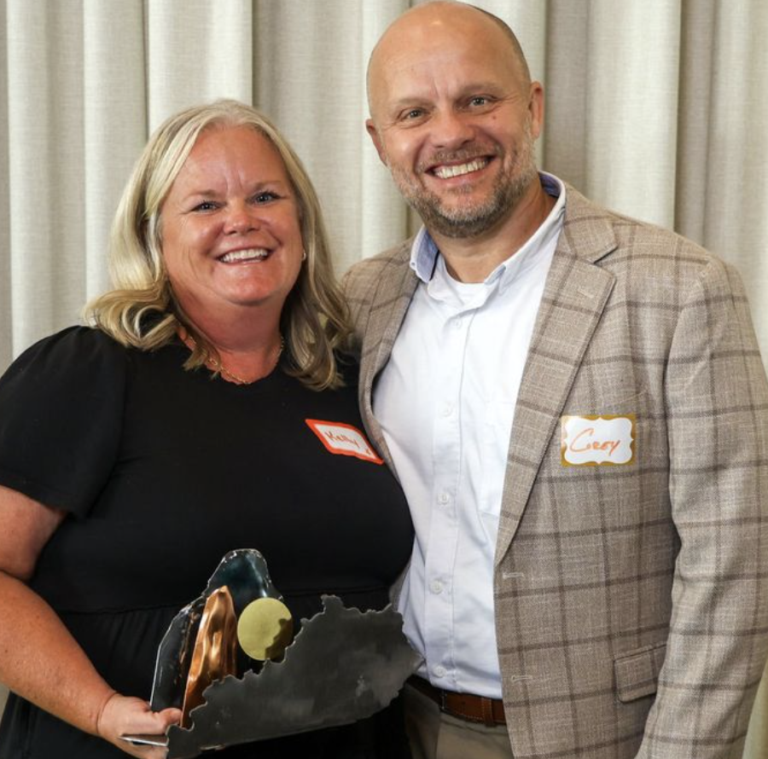
Mackey McNeill is founder and CEO of Mackey and The Prosperity People and of the CFO Collaborative. She and her husband live a “sustainability” life on their farm in Kenton County. She is an author, an international speaker, and a dedicated environmentalist.