











As communities across the country recognize American Water Works Association’s Source Water Protection Week, Sept. 27–Oct. 3 five regional water organizations are highlighting the importance of protecting the Ohio River and the watersheds that support the region’s drinking water and wastewater systems.
The Ohio River is a shared resource that connects communities across state lines, and protecting it takes a community. Drinking water providers, wastewater utilities, regulatory agencies, businesses, residents, and other partners all play an important role in protecting water quality throughout the watershed. This year’s Source Water Protection Week theme, “Protect the Source. Protect Your Health. We All Have a Role,” reinforces a simple but important message: protecting the water we rely on is a shared responsibility.
For communities throughout the Ohio River Basin, that responsibility extends across state lines and brings together drinking water utilities, state and federal agencies, local partners, and an interstate agency. The Ohio River Valley Water Sanitation Commission (ORSANCO), Northern Kentucky Water District (NKWD), Sanitation District No. 1 (SD1), Greater Cincinnati Water Works (GCWW), and the Metropolitan Sewer District of Greater Cincinnati (MSD), work in different areas of the water cycle but share a common goal: protecting water resources for the communities they serve.
ORSANCO’s role in source water protection
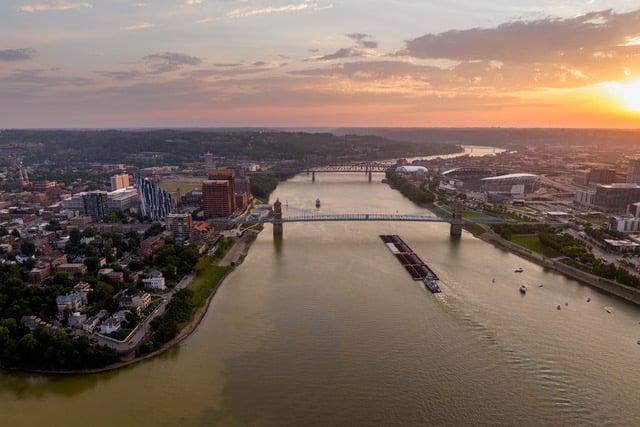
For nearly 80 years, ORSANCO has worked across state lines to protect the Ohio River as a vital shared water resource. Through extensive water quality monitoring, interstate coordination, spill response and notification, and partnerships with drinking water utilities and state and federal agencies, ORSANCO helps provide the information and communication needed to protect the river and the communities that depend on it.
A key component of that work is ORSANCO’s Organics Detection System, a network of monitoring stations located at drinking water utilities and other strategic locations along the Ohio River. Over the last fiscal year, the system analyzed 18,026 samples, providing ongoing surveillance for selected organic compounds and helping identify potential contamination events. ORSANCO also received 420 spill reports through the National Response Center during the year, including 246 water-related incidents, underscoring the importance of timely communication and coordination among agencies and downstream water users.
“Protecting source water on a river like the Ohio is inherently a collaborative effort,” said Sam Dinkins, ORSANCO Executive Director. “The river crosses political boundaries, and protecting it requires strong communication and coordination across those same boundaries. ORSANCO works closely with our member states, drinking water utilities, wastewater agencies, and federal and local partners to monitor conditions, share critical information, and coordinate when potential threats arise. Source Water Protection Week is an important reminder that protecting the Ohio River benefits every community that depends on it.”
Source water protection focuses on safeguarding rivers, lakes, reservoirs and groundwater from pollution before it reaches drinking water intakes. Protecting these resources supports the ability of water utilities to provide safe, reliable drinking water to their communities.
Lindsey Rechtin, president/CEO of Northern Kentucky Water District (NKWD), said: “Protecting our drinking water starts with protecting the rivers we all rely on. The Ohio River is a shared resource, and ensuring its water remains safe and reliable requires the commitment of everyone, from water and wastewater utilities to businesses, regulatory agencies, and residents. At NKWD, we recognize that source water protection is essential to providing safe, reliable, and affordable drinking water, and we all have a role to play in protecting this resource for generations to come.”
“Protecting our drinking water starts long before it reaches the tap,” said GCWW executive director Andrea Yang. “Our employees work every day to provide clean, safe, reliable water, but everyone has a role to play in preventing pollution from entering our source water. Simple actions like properly disposing of chemicals, planting trees, picking up pet waste, and keeping litter out of storm drains can all help protect the aquifers, rivers and streams that supply our drinking water.”
Source water protection also includes the work performed by wastewater utilities to protect receiving waters. Wastewater treatment helps remove pollutants from used water before it is returned to the environment, supporting the health of rivers and streams.
Brian Ellerman, general counsel at SD1, added: “As SD1 celebrates 80 years of serving Northern Kentucky, protecting the Ohio River remains a core part of our mission. Our treatment facilities protect public health by removing waste and reducing disease-causing germs in wastewater, preventing more than 105,000 pounds of waste from entering the Ohio River each day. Through our stormwater program, we also monitor local streams and work with residents, businesses and local governments to reduce runoff pollution in the creeks and streams that flow to the Ohio River. Together, these services help protect our drinking water source from human waste, litter, harmful chemicals and other pollutants.”
Source water protection extends across the entire water cycle. While drinking water utilities work to protect water before it reaches the tap, wastewater utilities play an equally important role. Deb Leonard, Communications Manager for MSD, said: “MSD collects and treats wastewater from across Hamilton County, Ohio, protecting the environment and public health by returning clean water to local rivers and streams.” This work is an essential part of our shared responsibility to safeguard the Ohio River and the waterways that connect our communities.
The five organizations encourage residents, businesses, and policymakers to join them in recognizing the importance of source water protection, not only during Source Water Protection Week, but every day.
For more information about Source Water Protection Week, visit awwa.org.
Ohio River Valley Water Sanitation Commission